
Diagnostic Ultrasound: Seeing What's Actually Causing Your Pain Before You're Treated
If you've had joint or muscle pain for more than a few weeks, a diagnostic ultrasound scan is usually the quickest way to find out exactly what's causing it — tendon, muscle, joint lining or something else — before anyone decides on a treatment. It's a quick, painless scan using sound waves rather than radiation, and at GD Health Clinic it's often done in the same appointment as your assessment, so you leave with an answer rather than a referral letter.
What a diagnostic ultrasound scan actually shows
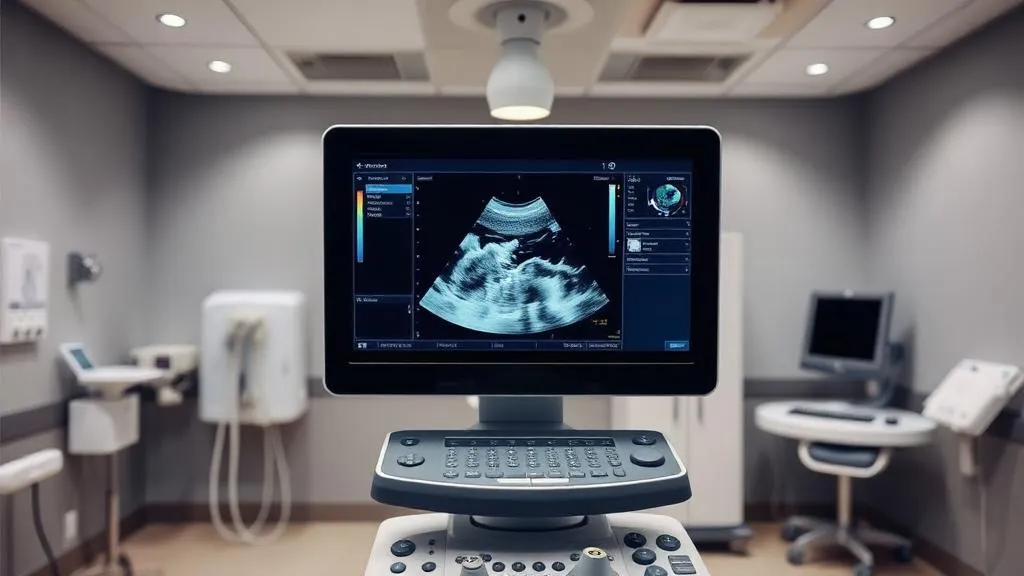
A diagnostic ultrasound uses a handheld probe and sound waves to build a live picture of the soft tissue under the skin — tendons, muscles, ligaments and the lining of a joint. Unlike an X-ray, which mainly shows bone, ultrasound is particularly good at picking up the soft-tissue problems that cause most ongoing joint and tendon pain: thickened or irritated tendons, inflamed joint linings, small tears, and fluid build-up around a joint.
It's also dynamic — the clinician can move the joint while scanning it, watching how a tendon or ligament behaves under load rather than relying on a single static image. That's often what makes the difference between a guess and an actual diagnosis.
Why it's worth doing before you start treatment
Two of the most common reasons for pain — a tendon problem and a joint problem — are treated differently, and treating the wrong one rarely helps. Rest and physiotherapy that would settle a strained tendon won't do much for irritated joint lining, and a treatment aimed at a joint won't touch a tendon issue. Guessing based on symptoms alone works reasonably well early on, but if pain has been dragging on for weeks or months, a scan usually saves time rather than costing it.
- Confirms whether the problem is tendon, muscle, joint or something else entirely
- Shows how severe the change is, not just where it hurts
- Means treatment — physiotherapy, a guided injection, or shockwave therapy — is picked to match what's actually going on
- Gives a clear baseline to check against if the same area flares up again later
What it's commonly used for
The people we scan most often are 40 and over, dealing with arthritis or long-standing tendon pain, and wanting to understand their options before committing to surgery or a long course of treatment. Common reasons for a diagnostic ultrasound include:
- Shoulder pain that hasn't settled — checking for rotator cuff or tendon changes
- Knee or hip pain where it's unclear whether it's the joint itself or the surrounding soft tissue
- Tendon pain around the elbow, heel or Achilles that hasn't responded to rest
- Swelling around a joint that hasn't got an obvious cause
- Confirming a diagnosis before a guided injection or a course of shockwave therapy
What happens during the scan
There's no special preparation needed. You'll come in for an assessment as normal — talking through what's been going on and how it started — and if a scan would help clarify things, it's done there and then with a small amount of gel and a handheld probe over the area. It's not uncomfortable, there's no radiation involved, and you'll usually get a clear picture of what's going on before you leave, rather than waiting weeks for results or a referral to be actioned.
Where the scan points towards a joint problem — degenerative wear in a knee or hip, for example, or an inflamed bursa around the shoulder — a guided injection may be discussed as an option, using either steroid or hyaluronic acid depending on what's being treated. Where it points towards a tendon that's become thickened or irritated over time, shockwave therapy — run from our Barrow-in-Furness site as a course of 4-6 sessions, 7-10 days apart — is often the more appropriate route. And where the picture is less clear cut, or the changes are mild, a course of physiotherapy to rebuild strength and movement is frequently the sensible starting point instead.
It's also worth saying what a scan doesn't do: it won't tell you there's nothing at all wrong with you if you're clearly in pain — soft-tissue irritation doesn't always show up dramatically on imaging. What it does is rule things in or out with far more confidence than guesswork, which on its own is often enough to stop months of trying one thing after another without knowing why it isn't working.
Why this matters more here than elsewhere
GD Health Clinic is the only clinic in south Cumbria offering diagnostic ultrasound alongside ultrasound-guided treatment on site. In most of the region, getting a musculoskeletal scan means a GP referral and a wait, often followed by a separate referral for treatment once the results are back. Scanning and treating in the same clinic — sometimes the same visit — is the exception rather than the norm locally, and it's why people travel in from across south Cumbria for an assessment here rather than waiting for an NHS scan slot.
Diagnostic ultrasound across south Cumbria
Assessments and diagnostic ultrasound scans are available at both our sites — Barrow-in-Furness and Millom — so wherever you're coming from across Barrow, Millom, Dalton-in-Furness, Ulverston or Askam, an assessment is the sensible place to start. Shockwave therapy itself runs from the Barrow-in-Furness site only, but the scan that helps decide whether shockwave is even the right treatment can be done at either location.
Frequently asked questions
Is a diagnostic ultrasound scan painful?
No. It's a handheld probe moved over the skin with a small amount of gel — there's no needle involved and no radiation, just gentle pressure over the area being scanned.
Do I need a GP referral to get scanned?
No — you can book an assessment directly with GD Health Clinic. If a scan would help clarify what's going on, it can usually be done as part of that same visit.
Can the scan tell you straight away what's wrong?
In most cases, yes. Ultrasound gives a live, clear picture of tendons, muscles and joint linings, so you'll usually know what's causing the pain before you leave rather than waiting on a report.
What happens after the scan?
Whatever the scan shows, we'll talk through the realistic options there and then — which might be physiotherapy, a guided injection, shockwave therapy, or simply a plan for managing things yourself — with no obligation to book anything further.
Is diagnostic ultrasound available at both GD Health Clinic sites?
Yes — assessments and diagnostic ultrasound are available at both Barrow-in-Furness and Millom. Shockwave therapy is Barrow-in-Furness only.
How long does the scan itself take?
The scan is usually only a few minutes once you're being seen — most of the appointment is the assessment and conversation about what's been going on, with the scan used to confirm or clarify what that's pointing towards.
Will I need scanning every time I come in?
No. A scan is most useful when it's genuinely unclear what's causing the pain, or before starting a treatment like a guided injection or shockwave therapy. Follow-up visits and straightforward cases don't usually need repeat scanning.
assessment.
Call or book online, and we'll book you in at the clinic that offers the treatment you need. Current prices are on the price list.
Book onlineOr call 07849 617337. Barrow-in-Furness: FAB Fitness and Health Club, Hollywood Park, Hindpool Road. Millom: 12 Wellington Street.