
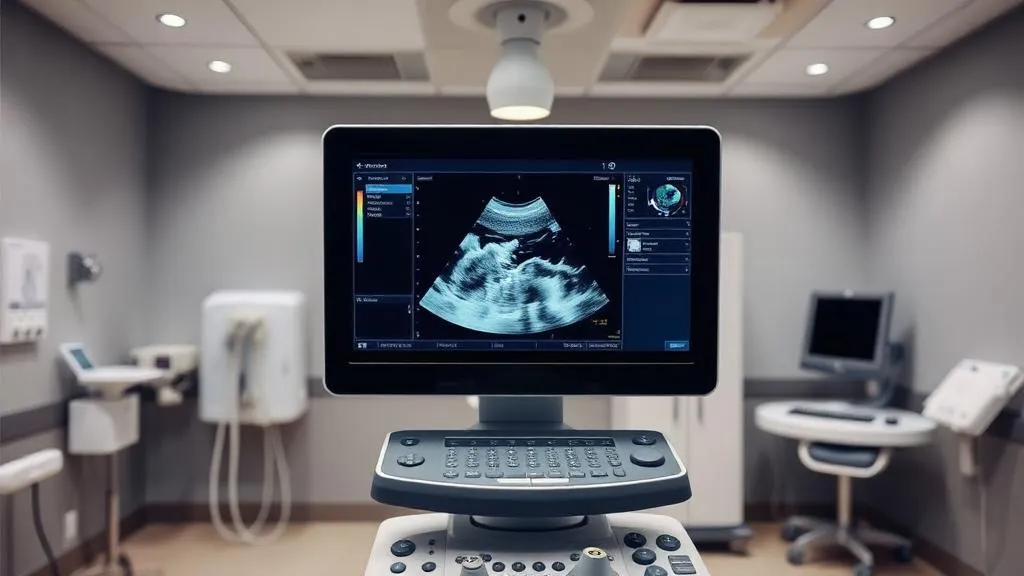
Diagnostic Ultrasound Scans in South Cumbria: No Need to Travel to a City
If you've got joint or muscle pain that isn't settling, a diagnostic ultrasound scan can show what's actually going on inside the joint or tendon — without a trip to Preston, Lancaster or further afield. GD Health Clinic is the only clinic in south Cumbria offering diagnostic ultrasound on-site, with scans available at both the Barrow-in-Furness and Millom clinics — no referral needed, and no trip out of the area to find out what's going on.
What is a diagnostic ultrasound scan?
A diagnostic ultrasound uses sound waves to build a live picture of the soft tissue under the skin — muscle, tendon, ligament and the lining of a joint. Unlike an X-ray, it shows soft tissue clearly, and unlike an MRI, the image appears in real time, so the person scanning you can move the joint and watch what happens as you do.
For a lot of the aches and pains people in Barrow, Millom, Dalton-in-Furness, Ulverston and Askam live with day to day — a shoulder that catches, a knee that swells after exercise, a tendon that's been niggling for months — a scan turns "probably" into "actually here's what's going on."
Why not just wait for a GP referral?
A GP can refer for imaging, but a hospital ultrasound or MRI slot in Cumbria can mean weeks of waiting, and often a round trip to a hospital outside the immediate area. Booking a scan directly with GD Health Clinic means it can usually happen at the next available appointment, at either the Barrow or Millom clinic, without needing to travel to a city.
This matters most for people who are 40 and over dealing with arthritis or a stubborn tendon problem and want to know what they're dealing with before deciding on the next step — whether that's physiotherapy, an injection, or simply reassurance that nothing serious is going on.
What can a scan actually show?
- Whether a tendon is inflamed, thickened, or has small tears
- Fluid or swelling inside or around a joint
- Bursitis (an inflamed cushioning sac near a joint)
- Calcific deposits in a tendon, such as in the shoulder
- Whether a joint shows signs of wear consistent with arthritis
It's a look at the structure causing the pain, not a diagnosis on its own — the clinician talks through what the scan shows and what it means for treatment.
Which joints and areas get scanned
Diagnostic ultrasound works well anywhere there's a joint, tendon or muscle close enough to the surface to image clearly. The most common reasons people book a scan at GD Health Clinic are:
- Shoulder — catching, pain lifting the arm overhead, or pain that's worse at night, which can point to a tendon problem, bursitis, or calcific deposits
- Knee — swelling after activity, stiffness first thing in the morning, or pain going up and down stairs, all of which can be signs of osteoarthritis
- Hip — groin or outer hip pain that limits walking or sport, which a scan can help narrow down between joint wear and a soft tissue cause
- Elbow — tennis elbow or golfer's elbow that hasn't settled with rest
- Ankle and heel — plantar fasciitis, Achilles pain, or ankle pain that keeps coming back
Not every one of these needs a scan before treatment starts — plenty of tendon and muscle problems respond well to physiotherapy or shockwave therapy without imaging first. A scan is most useful when the picture isn't clear, when a first course of treatment hasn't helped, or when you want to know what you're dealing with before choosing between options like a steroid injection, hyaluronic acid, or physiotherapy.
Scan, X-ray, or MRI — what's the difference?
An X-ray shows bone, so it's useful for fractures and can show more advanced joint wear, but it won't show a tendon or the soft lining of a joint. An MRI shows soft tissue in detail but usually means a referral, a wait, and a trip to a hospital scanner. A diagnostic ultrasound sits between the two for a lot of everyday joint and tendon pain — it shows soft tissue clearly, it's done in the room with you rather than sent off for a radiologist's report days later, and the clinician can move the joint during the scan to see what happens with movement, which a static X-ray or MRI can't do.
What happens after the scan
Once the scan is done, the findings are talked through there and then, along with what they mean for next steps. Depending on what's found, that might be a course of physiotherapy, shockwave therapy for a tendon problem, or an ultrasound-guided steroid or hyaluronic acid injection for a joint. There's no obligation to book further treatment on the day — some people just want to know what's going on before deciding anything.
What happens at your scan
You'll be asked about the history of the pain and what makes it worse, then the area is scanned while a probe is moved over the skin with a small amount of gel. It's not uncomfortable, and you can see the same screen the clinician is looking at. If treatment is appropriate on the day, GD Health Clinic also offers ultrasound-guided injections — steroid or hyaluronic acid — so the needle placement can be checked on the same scan rather than guided by feel alone.
Barrow and Millom — no need to travel to a city
GD Health Clinic runs from FAB Health and Fitness club, Hollywood Park, Barrow-in-Furness, and from 12 Wellington Street, Millom. Patients from Dalton-in-Furness, Ulverston and Askam use both sites depending on what's easiest — for a scan or an ultrasound assessment, there's no need to book anything in a city or wait for a hospital appointment.
FAQs
Do I need a GP referral for an ultrasound scan?
No — you can book directly with GD Health Clinic. Some people come after seeing a GP, others come straight to the clinic to find out what's causing the pain.
Is a diagnostic ultrasound the same as the guided injections you offer?
They're related but separate. The diagnostic scan looks at what's happening in the joint or tendon; if an injection is appropriate, it can then be given under ultrasound guidance so the needle placement is checked as it happens.
How long does a scan take?
A typical scan appointment is a short, single visit — long enough to scan the area, discuss what's shown, and talk through options.
Can a scan tell me if I have arthritis?
It can show signs consistent with joint wear, alongside your symptoms and history, which helps guide what treatment — if any — makes sense next.
Is the scan available in Millom as well as Barrow?
Yes, diagnostic ultrasound is offered at both the Barrow-in-Furness and Millom clinics.
What if the scan shows nothing serious?
That's a useful outcome too — it can rule out a structural cause and point toward physiotherapy or simple activity changes instead of an injection, which some people would rather try first.
assessment.
Call or book online, and we'll book you in at the clinic that offers the treatment you need. Current prices are on the price list.
Book onlineOr call 07849 617337. Barrow-in-Furness: FAB Fitness and Health Club, Hollywood Park, Hindpool Road. Millom: 12 Wellington Street.