
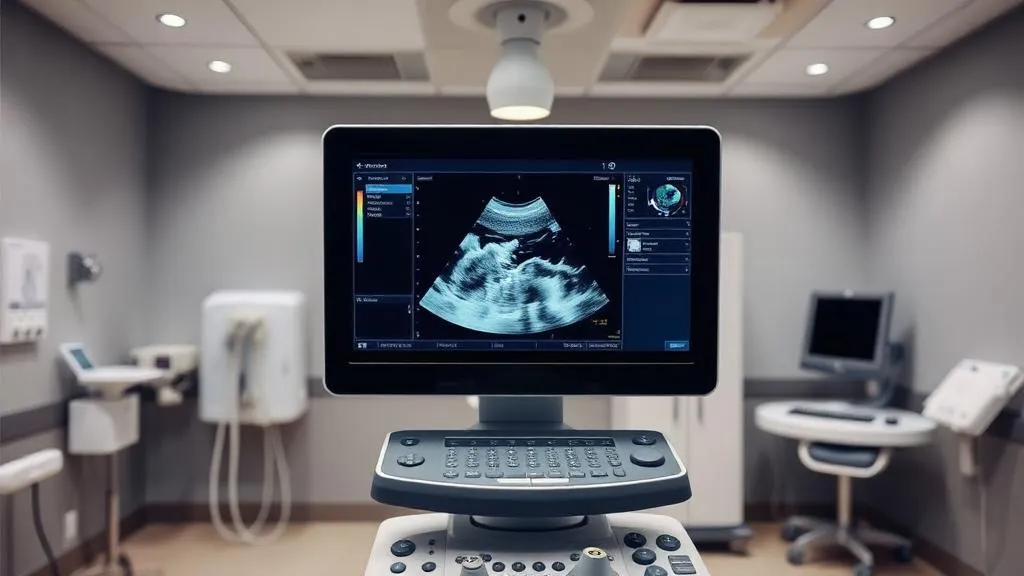
Diagnostic Ultrasound vs an MRI: Which Do You Actually Need?
Short answer: if you have joint or soft tissue pain — a bad shoulder, a sore knee, a stiff hip — an ultrasound usually answers the question faster, cheaper, and without a GP referral. An MRI still has its place, but for most of the pain that brings people into a clinic in Barrow-in-Furness or Millom, ultrasound is the right first scan, not the second choice.
This comes up constantly at GD Health Clinic, because we're the only clinic in south Cumbria offering diagnostic ultrasound alongside ultrasound-guided joint injections. People assume ultrasound is a "lesser" scan than an MRI — something you have when you can't get the real one. That's not how it works for musculoskeletal pain. Each scan is built to look at different things, and picking the wrong one wastes time.
What ultrasound actually shows
Ultrasound uses sound waves, not radiation, and it images soft tissue in real time — tendons, ligaments, muscles, bursae, and the fluid inside a joint. Because it's live, the person scanning you can move the joint while looking at the screen: bend the elbow, lift the arm, flex the knee. That's something an MRI can't do — an MRI is a static picture taken lying still in a tube.
For a lot of the problems we see — tennis elbow, a swollen bursa, a thickened Achilles tendon, fluid on a knee, a rotator cuff that catches on lifting — ultrasound sees the problem clearly, in the position that actually causes the pain, in a 20-30 minute appointment. There's no referral to wait on and no radiation.
Ultrasound is also what makes an accurate injection possible. When we're treating a joint or bursa with a steroid or hyaluronic acid injection, scanning it first means the needle goes exactly where the problem is, rather than being placed by feel.
What an MRI is actually for
MRI earns its place for anything ultrasound can't reach or can't see through — inside a joint, inside bone, or through cartilage and ligament that sit deeper than sound waves can usefully image. A suspected meniscus tear, a cruciate ligament injury, disc problems in the spine, or anything where a surgeon needs to see the inside of a joint before an operation — that's MRI territory, and no amount of ultrasound experience changes that.
MRI is also the right call when the picture on ultrasound doesn't add up, or when surgery is already on the table and the surgeon needs their own detailed imaging to plan around.
The trade-off is access. Private MRI has to be booked at a scanning centre with the equipment, and NHS MRI referrals typically join a waiting list rather than being seen within days. That's not a reason to choose the wrong scan — if you genuinely need an MRI, it's worth the wait — but it is a reason not to default to "MRI" for a problem that ultrasound could answer this week.
Conditions where ultrasound usually gives the answer
- Tennis elbow and golfer's elbow — thickening or tearing of the tendon at the elbow
- Rotator cuff problems and shoulder impingement
- Achilles tendon pain and plantar fasciitis
- Bursitis in the hip, shoulder or knee
- Swollen or fluid-filled joints, including knees affected by arthritis
- Muscle tears and soft tissue injuries after sport
If any of these sound familiar, ultrasound is very likely the scan that actually moves things forward — not a waiting-room referral for an MRI that then comes back showing what an ultrasound would have shown in a fraction of the time.
So which one do you actually need?
As a rough rule: if the problem is a tendon, a bursa, a muscle, or "is there fluid in this joint", start with ultrasound. If the problem is inside the joint itself — ligaments, meniscus, cartilage, or bone — or a scan is needed to plan surgery, that's an MRI conversation, usually through a GP or consultant referral.
Cost and speed matter here too. Private ultrasound is far cheaper than private MRI, and at GD Health it can usually be booked and completed within days rather than weeks. For a lot of people, an ultrasound scan settles the question well enough that an MRI is never needed at all.
Where this fits for people in Barrow, Millom and south Cumbria
Before GD Health opened, getting any kind of musculoskeletal scan locally meant a GP referral and a wait, or a drive out of the area for a private one. We run diagnostic ultrasound at both Barrow-in-Furness and Millom, and it's the same scanning that guides our injections — so if a scan shows a joint or bursa that would benefit from treatment, that can often happen in the same visit rather than being a separate appointment weeks later.
This matters most for the patients we see day to day: people over 40 dealing with arthritis or a stubborn tendon problem, trying to stay active and stay off a waiting list for a joint replacement. An ultrasound scan is often the fastest way to actually see what's going on, rather than guessing from symptoms alone.
What to expect at your scan
An ultrasound assessment at GD Health takes around 20-30 minutes. Gel is applied to the skin and a handheld probe is moved over the area — there's no need to undress fully, no radiation, and no time inside a scanner. You'll usually be talked through what's on screen as it happens, rather than waiting days for a report. If treatment would help, that's discussed there and then, not as a separate referral.
Why scanning before treating matters
It's tempting to skip straight to treatment when a joint has hurt for months — go in for a steroid injection, try physiotherapy, hope it settles. The problem is that "shoulder pain" or "knee pain" can mean several different things underneath, and the right treatment depends on which one it actually is. A knee that's swollen because of arthritis is a different problem to a knee with a torn meniscus, even though both can feel similar day to day.
Scanning first means treatment is aimed at what's actually there rather than what's most likely. It's also why an ultrasound-guided injection tends to land better than one placed by feel alone — the person doing it can see the needle tip and the target tissue on screen at the same time.
Frequently asked questions
Can ultrasound see everything an MRI can?
No — ultrasound is excellent for tendons, muscles, bursae, and joint fluid, but it can't see through bone or clearly image the inside of a joint the way MRI can. They're complementary tools, not competing ones.
Do I need a GP referral for an ultrasound scan?
No. Diagnostic ultrasound at GD Health is available without a GP referral, which is usually the biggest time saving compared with waiting for an NHS scan.
Will I need an injection if my scan shows a problem?
Not necessarily — a scan is a diagnostic step, not a commitment to treatment. If a steroid or hyaluronic acid injection would help, that's discussed as an option, not assumed.
What if my ultrasound scan doesn't explain the pain?
Then an MRI referral is the sensible next step, usually via your GP or a consultant, particularly if the problem looks like it's inside the joint rather than in the surrounding soft tissue.
Is ultrasound scanning painful?
No. It's the same gel-and-probe scan used in pregnancy imaging — some gentle pressure over a sore area, but nothing invasive.
Can I have an ultrasound scan and treatment in the same appointment?
Often, yes. Because the same scan that diagnoses the problem can also guide a steroid or hyaluronic acid injection, some patients have both done in one visit rather than being scanned, sent away, and booked back in separately.
assessment.
Call or book online, and we'll book you in at the clinic that offers the treatment you need. Current prices are on the price list.
Book onlineOr call 07849 617337. Barrow-in-Furness: FAB Fitness and Health Club, Hollywood Park, Hindpool Road. Millom: 12 Wellington Street.