
Do I Need a Scan for My Shoulder Pain?
Not always — but if your shoulder pain has been hanging around for more than a few weeks, is worse at night, or is stopping you lifting your arm above shoulder height, a scan is usually worth having. A diagnostic ultrasound takes a few minutes, is completely painless, and shows exactly what's causing the pain — whether that's a frozen shoulder, an inflamed bursa, a rotator cuff problem or straightforward wear — rather than treating it as a guess.
Why "shoulder pain" isn't one thing
The shoulder is one of the most commonly misdiagnosed joints, because several very different problems all produce a similar ache: pain that's worse reaching overhead or behind your back, and disturbed sleep if you roll onto that side. A frozen shoulder, a bursa flared up with inflammation, a rotator cuff tendon under strain, and early arthritis in the joint can all feel broadly similar from the outside — but they respond to different treatment. Guessing which one you've got, and treating it accordingly, is how people end up doing months of the wrong exercises or waiting out a problem that an injection could have settled much sooner.
A frozen shoulder specifically tends to move through stages — pain first, often worst at night, followed by a stiff phase where the shoulder genuinely won't move as far as it used to, before it gradually loosens off again. The whole process can take a year or more if it's simply left to run its course, which is part of why it's worth getting looked at properly rather than assuming it'll sort itself out on the same timescale as an ordinary muscle strain. Bursitis, by contrast, tends to come on faster and settle faster once the inflammation is treated, and a rotator cuff problem is usually more about pain with specific movements — reaching up, reaching back — than a generally stuck joint.
When a scan is actually worth having
You don't need a scan for every twinge — plenty of shoulder pain settles with rest, activity changes and a bit of physiotherapy. A scan earns its place when the pain has gone on for more than three or four weeks without improving, when it's noticeably restricting how far you can move your arm, when it's bad enough at night to wake you, or when you've already tried the obvious things and nothing's shifted. In those situations, seeing what's actually happening inside the joint changes the plan far more than another few weeks of waiting.
What a diagnostic ultrasound actually shows
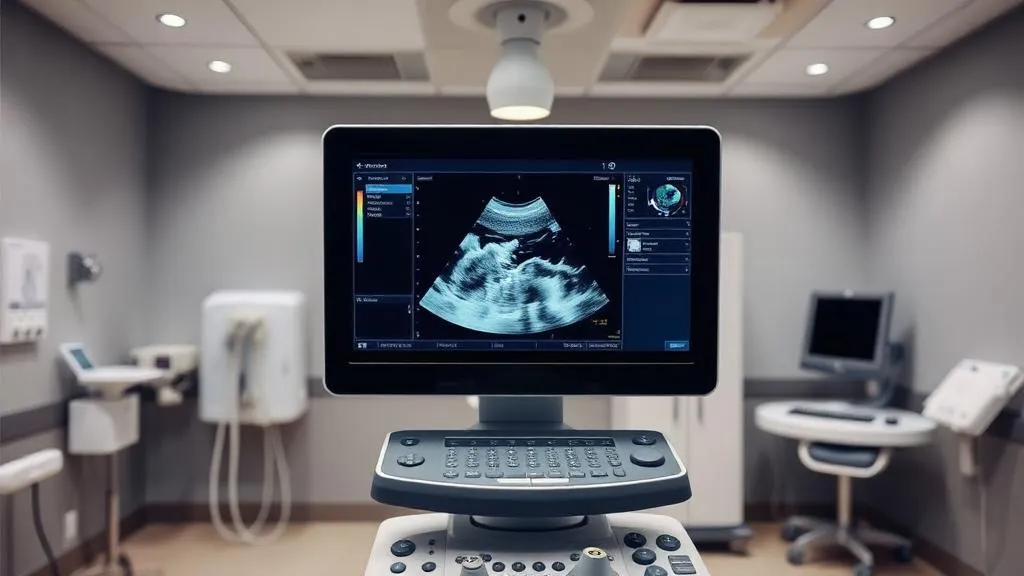
An ultrasound scan of the shoulder shows the soft tissue — tendons, the bursa, the joint capsule — in a way an X-ray can't. It can pick out an inflamed bursa (bursitis), thickening and tightening of the joint capsule that's typical of a frozen shoulder, or irritation in the rotator cuff tendons. GD Health Clinic is the only clinic in south Cumbria offering diagnostic ultrasound alongside ultrasound-guided injections, which matters because it means the same appointment that finds the problem can also be used to treat it accurately, rather than sending you away for imaging elsewhere and starting again.
What treats it: usually a steroid injection
For a genuinely inflamed shoulder — a flared-up bursa, or the painful early stage of a frozen shoulder — a steroid injection is usually the most effective way to bring the inflammation down quickly. It's an anti-inflammatory medication injected directly into or around the affected area, and because it's guided by ultrasound rather than judged from the outside, it goes exactly where it needs to. For a joint like the shoulder, where the bursa, tendons and joint capsule sit close together, that accuracy is the difference between an injection that works and one that misses.
Relief commonly starts within a few days and can last weeks to a few months, which is usually enough time to get moving again and make real progress with physiotherapy — the two work best together rather than as alternatives. A steroid injection doesn't repair anything on its own; it settles inflammation enough that the shoulder can be rehabilitated properly instead of staying guarded and stiff. Hyaluronic acid injections aren't generally the right tool here — they're aimed at degenerative joints that are worn rather than inflamed, which is a different problem to the ones a scan most often turns up in the shoulder.
Physiotherapy still matters either way. On its own, it's often enough for a mild rotator cuff niggle or the early days of a frozen shoulder. Once a joint is properly inflamed and stuck, though, physiotherapy alone tends to be slow and uncomfortable — trying to stretch and strengthen a shoulder that's still actively inflamed can aggravate it further. That's the usual case for doing the injection first: settle the inflammation, then use physiotherapy to rebuild movement and strength once the joint is actually able to tolerate it.
What to expect at your appointment
An assessment starts with a conversation about how the pain started, what makes it worse, and what you've already tried, followed by a physical examination of how the shoulder actually moves. If a scan is going to change the plan, it's done there and then rather than booked as a separate appointment. From that, you'll get a clear answer on what's actually causing the pain and a realistic plan — which might be physiotherapy, a steroid injection, or a combination, depending on what the scan shows. Nothing is pushed on you; the point of the assessment is working out what your shoulder actually needs.
Getting shoulder pain assessed in Barrow-in-Furness and Millom
GD Health Clinic is based at FAB Health and Fitness club, Hollywood Park, Barrow-in-Furness, with a second clinic in Millom. We see people from across south Cumbria — Dalton-in-Furness, Ulverston, Askam and further afield — for ultrasound-guided injections that would otherwise mean travelling further out of the area. Shoulder pain that stops you reaching, lifting or sleeping properly is worth getting looked at properly rather than working around indefinitely — an assessment gives you a straight answer on what's going on and what actually helps.
Frequently asked questions
Does the shoulder ultrasound scan hurt?
No — it's the same painless technology used in pregnancy scanning, just applied to the shoulder. It adds a few minutes to the appointment and gives a much clearer picture before any treatment decision is made.
Do I need a GP referral for a shoulder scan?
No — you can book an assessment directly with GD Health Clinic, and the scan is done as part of that appointment if it's going to be useful.
How much does a shoulder steroid injection cost?
Pricing depends on whether a scan is included — see our pricing page for current costs, or ask when you book an assessment.
How long does shoulder pain relief from a steroid injection last?
It varies by person and by cause, but relief commonly lasts several weeks to a few months — often enough time to make real progress with physiotherapy alongside it.
What if it's not something a scan or injection can help?
Plenty of shoulder pain settles with physiotherapy and activity changes alone, especially early on. An assessment will tell you honestly whether that's likely to be enough or whether a scan and injection are worth adding in.
How is a frozen shoulder different from a rotator cuff problem?
A frozen shoulder involves the whole joint capsule tightening, so movement is restricted in every direction, not just one. A rotator cuff problem tends to be more specific — pain with certain movements, like reaching overhead or behind your back, with more of the range still available. A scan is the most reliable way to tell the two apart rather than guessing from symptoms alone.
assessment.
Call or book online, and we'll book you in at the clinic that offers the treatment you need. Current prices are on the price list.
Book onlineOr call 07849 617337. Barrow-in-Furness: FAB Fitness and Health Club, Hollywood Park, Hindpool Road. Millom: 12 Wellington Street.