
Why Does My Heel Hurt When I Walk? Causes and What Actually Helps
Most heel pain that flares up when you walk — especially that first painful step out of bed or up from a chair — is plantar fasciitis, caused by strain in the band of tissue that runs along the bottom of your foot. It's rarely anything urgent, but it doesn't tend to settle on its own if you keep walking through it, and there are a few other, less common causes worth ruling out too. Here's what's usually behind it, and what actually helps it move on.
What's usually causing it
Heel pain that's worst with the first few steps in the morning, or after sitting for a while, is the classic pattern of plantar fasciitis — inflammation and micro-strain in the plantar fascia, the thick band of tissue connecting your heel to the base of your toes. It tends to build up gradually, often linked to a change in activity (more walking or standing than usual), worn-out footwear, tight calves, or simply carrying more load through the foot than it's used to. Once it's irritated, ordinary walking keeps aggravating it, which is why it can drag on for months if it's left to sort itself out.
That said, "heel pain when walking" isn't always plantar fasciitis. Achilles tendinopathy causes pain at the back of the heel rather than underneath it, and tends to be worse after activity rather than first thing. A genuine heel spur can contribute to plantar fasciitis pain but is very rarely the whole story. And in people over 40 with wider joint pain, arthritis in the foot or ankle can also show up as a deep ache that's worse on weight-bearing. Getting the cause right matters, because the treatment for each is different.
Plantar fasciitis — the most common cause
Classic plantar fasciitis is sharp or stabbing under the heel with the first steps of the day, easing off as you move around, then often returning after standing or walking for a while. Pressing directly under the heel bone is usually tender. It's more common if you're on your feet a lot for work, have recently increased your walking or running, wear unsupportive footwear, or have tight calf muscles pulling on the fascia via the Achilles.
Left alone, it can settle by itself over several months — but "several months" of pain with every step is a long time to put up with, and a fair number of cases become genuinely stubborn without some active treatment.
Other causes worth ruling out
- Achilles tendinopathy — pain and stiffness at the back of the heel, often worse after activity rather than first thing, sometimes with visible thickening of the tendon.
- Heel spurs — a bony growth that can develop alongside long-standing plantar fasciitis; the spur itself usually isn't the source of pain, the surrounding soft tissue inflammation is.
- Fat pad irritation — the cushioning under the heel thinning or bruising, more common with age or a sudden increase in time spent on hard floors.
- Arthritis — a deeper, more constant ache in the heel or ankle, usually alongside stiffness elsewhere, more likely if you're 40+ and have arthritis in other joints.
Telling these apart from the outside isn't always straightforward, which is where a proper assessment — and a scan, if it would change the plan — earns its place over guessing and hoping.
When to get it looked at
It's worth booking an assessment if the pain has gone on for more than three or four weeks despite rest and sensible footwear, if it's affecting how much you can walk or stand, if it's there most days rather than occasionally, or if you've already tried stretching and supportive shoes without any improvement. The earlier a stubborn case is properly assessed, the less time you spend limping through the school run or a shift on your feet waiting for it to sort itself out.
What actually helps
For most straightforward cases, the first steps are the boring but effective ones: supportive footwear, calf and plantar fascia stretching, reducing time on hard surfaces where practical, and often a short course of physiotherapy to address the underlying tightness or loading pattern rather than just the pain itself.
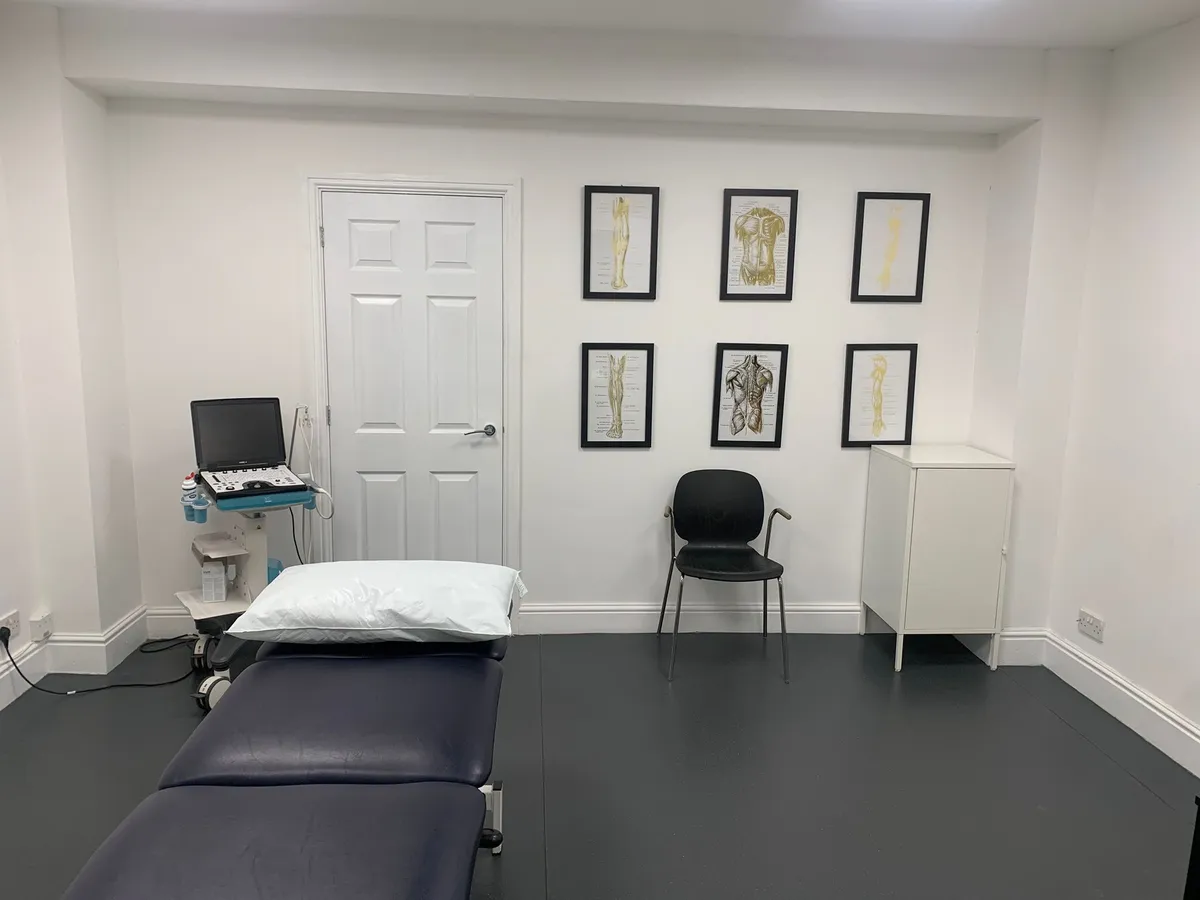
Where it's less clear-cut, or hasn't responded to the basics, a diagnostic ultrasound scan shows what's actually going on in the soft tissue — confirming plantar fasciitis, spotting Achilles tendon changes, or picking up fat pad or bursa involvement — rather than treating on a best guess. GD Health Clinic is the only clinic in south Cumbria offering this alongside ultrasound-guided injections, which means the same appointment that finds the problem can also treat it accurately.
For genuinely stubborn, long-standing plantar fasciitis or Achilles tendon pain that hasn't responded to stretching and physiotherapy, shockwave therapy is often the next step — a course of sessions using acoustic wave energy to stimulate the tissue's own repair process. It's currently available at our Barrow-in-Furness clinic only (the only shockwave machine between Workington and Kendal), run over a course of 4-6 sessions roughly a week to ten days apart. Where there's a genuinely inflamed area — a flared bursa alongside the fasciitis, for example — a steroid injection can also help settle things down quickly, guided by ultrasound so it goes exactly where it's needed.
None of these are a guarantee, and plenty of heel pain responds well to the simple things done properly. The point of an assessment is working out which category yours falls into, rather than trying everything at once.
Getting heel pain assessed in Barrow-in-Furness and Millom
GD Health Clinic is based at FAB Health and Fitness club, Hollywood Park, Barrow-in-Furness, with a second clinic in Millom. We see people from across south Cumbria — Dalton-in-Furness, Ulverston, Askam and further afield — who are dealing with heel and foot pain that's dragging on longer than it should. An assessment gives you a proper answer on what's actually causing it and a realistic plan for dealing with it, rather than another few months of guessing.
Frequently asked questions
Why is heel pain worst first thing in the morning?
Overnight, the plantar fascia tightens up in its shortened resting position. The first steps stretch it out suddenly, which is why plantar fasciitis is classically worse for those first few strides and eases as you move around.
Do I need a scan for heel pain?
Not always — many straightforward cases are diagnosed from the pattern of symptoms and a physical examination. A scan is worth having if the diagnosis isn't clear, or if it hasn't responded to the initial stretching and footwear changes.
How long does plantar fasciitis take to go away?
Left untreated it can take many months, sometimes longer. With proper stretching, footwear and physiotherapy most people improve significantly within a few months; stubborn cases that don't respond are where shockwave therapy or an injection tend to come in.
Is shockwave therapy painful?
It can feel uncomfortable during the session — a bit like a firm, rapid tapping — but it's a short appointment and most people tolerate it well without any anaesthetic needed.
Can I keep walking on it while it's being treated?
Usually yes, in moderation — complete rest isn't normally necessary, but reducing time on hard surfaces and avoiding pushing through sharp pain gives treatment the best chance to work. Your assessment will cover what's sensible for your specific case.
assessment.
Call or book online, and we'll book you in at the clinic that offers the treatment you need. Current prices are on the price list.
Book onlineOr call 07849 617337. Barrow-in-Furness: FAB Fitness and Health Club, Hollywood Park, Hindpool Road. Millom: 12 Wellington Street.