
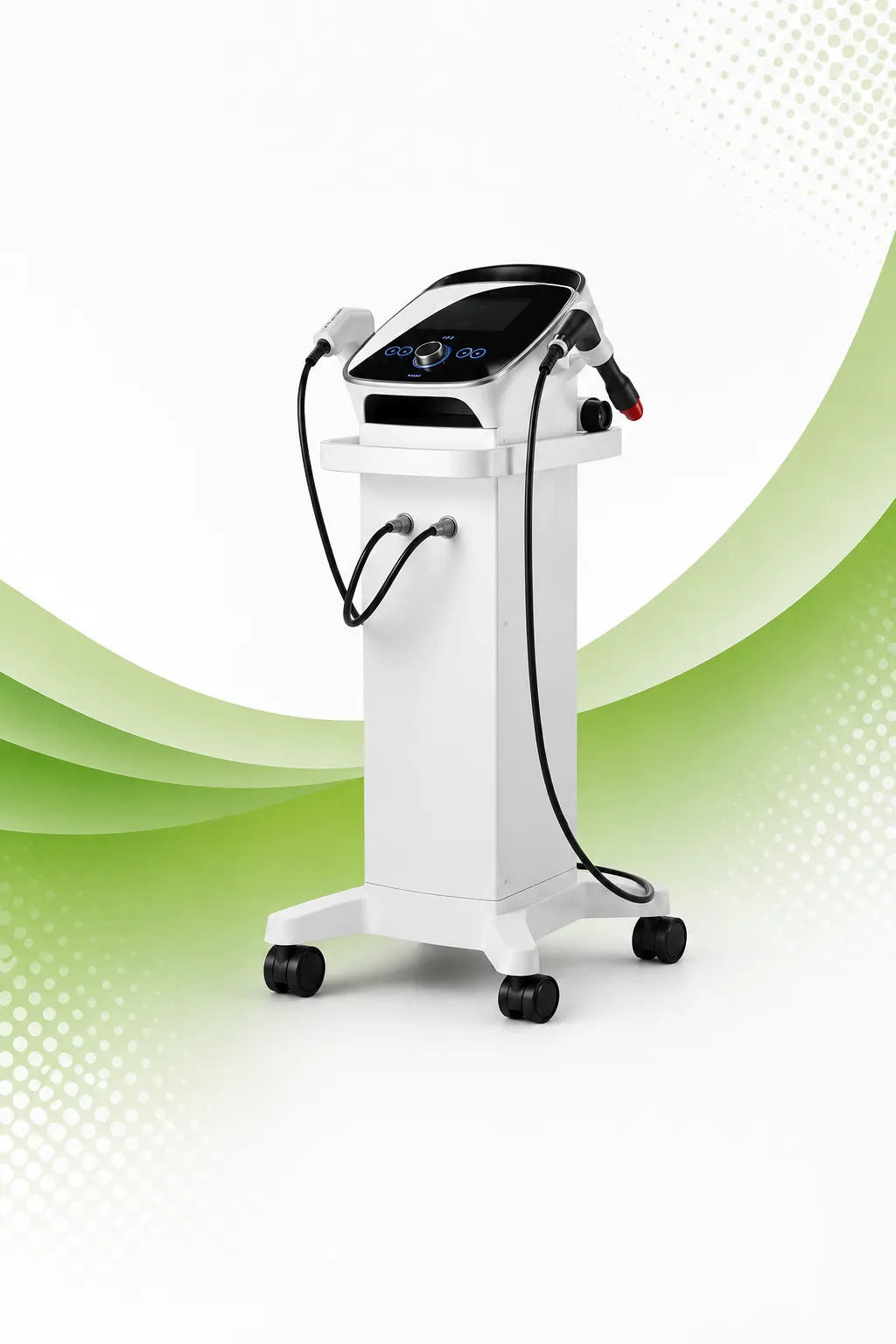
How Many Shockwave Therapy Sessions Do You Actually Need?
How Many Shockwave Therapy Sessions Do You Actually Need?
Most people need a course of 4 to 6 shockwave therapy sessions, spaced 7 to 10 days apart, to get real relief from stubborn tendon pain. One session on its own rarely does the job — shockwave works by triggering your body's own repair response, and that response builds over several treatments, not one.
If you've been told about shockwave therapy for a tendon problem that's been dragging on for months — plantar fasciitis, tennis elbow, Achilles pain, or a stubborn shoulder — the first question is usually "does it work," and the second is "how many times do I actually have to come in." Here's what a full course looks like at GD Health Clinic in Barrow-in-Furness, and what to expect along the way.
What a full course of shockwave therapy actually looks like
At GD Health Clinic, shockwave therapy is delivered as a course rather than a one-off treatment, because that's how the evidence says it works best:
- Number of sessions: typically 4 to 6
- Gap between sessions: 7 to 10 days
- Length of each appointment: around 45 minutes
- Cost: £80 per session
- Who delivers it: Phoebe, at the Barrow-in-Furness clinic
The gap between sessions matters. Shockwave doesn't numb pain in the moment — it delivers targeted acoustic energy into the damaged tendon tissue to stimulate blood flow and kick-start healing that's stalled out. That process needs time to happen between appointments, which is why sessions are spread 7 to 10 days apart rather than stacked closer together.
Why it's rarely just one session
Tendon problems that end up needing shockwave therapy are usually the ones that have already been through weeks — sometimes months — of rest, stretching, or over-the-counter painkillers without shifting. That kind of long-standing tendon damage (what's often called tendinopathy) doesn't resolve with a single stimulus. Each session builds on the last, gradually increasing blood flow and encouraging the tendon to repair itself properly rather than staying stuck in a low-grade, unhealed state.
Most people notice the clearest improvement isn't during the course itself, but in the weeks after the final session, as the tendon continues to remodel and settle.
What happens during and after each session
Each appointment is straightforward. Phoebe applies the shockwave device directly over the painful area — commonly the heel, elbow, Achilles, or shoulder — for a few minutes per site. It can feel uncomfortable or achy during treatment, particularly in the first session or two, but it isn't usually described as unbearable, and most people are back to normal daily activity the same day.
A few practical things to know before starting a course:
- Some soreness for a day or two after each session is normal
- Ice and gentle movement afterwards is generally fine unless you're told otherwise
- You may not feel dramatic improvement after session one or two — most people report change building from session three onwards
- It's worth attending the full course rather than stopping early once things feel a bit better, so the tendon has time to fully settle
What shockwave therapy is used for
At GD Health, shockwave is most commonly used for stubborn, longer-term tendon and soft tissue pain that hasn't responded to rest or basic physiotherapy, including:
- Plantar fasciitis (heel pain, especially first thing in the morning)
- Tennis elbow and golfer's elbow
- Achilles tendon pain
- Shoulder tendon pain that's become chronic
It isn't the right tool for every kind of pain — for degenerative joint pain like knee or hip arthritis, a steroid or hyaluronic acid injection is usually more appropriate, and GD Health can talk you through which applies to your situation at an assessment.
Only clinic between Workington and Kendal
GD Health Clinic is currently the only clinic offering shockwave therapy between Workington and Kendal, based at FAB Health and Fitness club, Hollywood Park, Barrow-in-Furness. It's worth knowing that shockwave is a Barrow-based service — it isn't currently offered at the Millom clinic. Patients from Millom, Dalton-in-Furness, Ulverston, Askam and the wider south Cumbria area travel into Barrow for their course.
Before starting shockwave, GD Health can also use diagnostic ultrasound to confirm what's actually going on in the tendon — useful if it's not entirely clear whether shockwave, physiotherapy, or something else is the right starting point.
Frequently asked questions
Does shockwave therapy hurt?
It can feel uncomfortable, especially in the first session or two, but it's brief and most people tolerate it well. Discomfort tends to ease as the course goes on and the tendon starts to respond.
How soon will I feel better?
Some people notice small changes after two or three sessions, but the fuller improvement usually builds over the course and continues for several weeks after the final appointment, as the tendon keeps healing.
What if I miss a session or space them out further?
Sticking to roughly 7 to 10 days between sessions gives the best chance of steady progress. If a session is missed, it's worth speaking to the clinic rather than assuming it doesn't matter.
Can I keep exercising during a course of shockwave?
Usually yes, with some adjustment — Phoebe will talk through what to scale back and what's fine to continue based on the area being treated.
Is shockwave available in Millom?
Not currently — shockwave therapy runs from the Barrow-in-Furness clinic only. The Millom clinic offers other services; an assessment can help work out the right option if travelling to Barrow isn't practical.
Curious whether shockwave is the right fit for your tendon pain, or whether an injection or physiotherapy makes more sense? You can read more about shockwave therapy at GD Health or see current pricing for all treatments.
assessment.
Call or book online, and we'll book you in at the clinic that offers the treatment you need. Current prices are on the price list.
Book onlineOr call 07849 617337. Barrow-in-Furness: FAB Fitness and Health Club, Hollywood Park, Hindpool Road. Millom: 12 Wellington Street.