
What Helps Knee Pain That's Worse Going Up and Down Stairs?
Knee pain that flares up on stairs — especially going down — is one of the most common complaints we see at GD Health Clinic. It's rarely a sign of something dangerous, but it's also not something to just push through indefinitely. In most cases it comes down to one of a handful of causes: the kneecap joint (patellofemoral pain), general wear in the knee (osteoarthritis), a strained or torn meniscus, or tendon pain around the front of the knee. What helps depends on which of these is behind it, which is why getting it looked at properly — rather than guessing — usually saves time in the long run.
We see this at both ends of the age range. Younger, active patients often develop it from running, squatting-heavy training, or a sudden jump in activity. But the pattern we see most is the one that builds gradually from your 40s onwards — a knee that's been fine for years starts complaining specifically on stairs, and it's often the first sign of joint wear rather than an injury from any one event. Neither group needs to just live with it; the treatment path is just different.
Why Stairs Make It Worse
Stairs load the knee differently to walking on flat ground, and going up and going down stress it in different ways. Climbing stairs works the quadriceps hard and compresses the kneecap against the thigh bone, so it tends to flare up conditions centred on the front of the knee. Going down is often worse for people, because the knee has to control your body weight eccentrically — the muscles are lengthening under load rather than shortening — which increases pressure through the joint surface and any inflamed tissue around it. If one direction is consistently worse than the other, that's a useful clue for whatever's assessing it.
What's Usually Causing It
- Patellofemoral pain — an ache behind or around the kneecap, often worse on stairs, squatting, or after sitting for a while.
- Knee osteoarthritis — gradual wear of the joint surface, more common from your 40s onwards, usually with some stiffness first thing in the morning too.
- Meniscus irritation — a strain or tear in the cartilage that cushions the knee, sometimes with catching, clicking, or a feeling of the knee giving way.
- Patellar tendinopathy — pain just below the kneecap where the tendon attaches, common in people who do a lot of walking, running, or squatting-type work.
Simple Checks That Point You in the Right Direction
You don't need a medical background to narrow it down a bit before you're seen. Pain that's worse going down stairs and sits behind the kneecap usually points towards the joint itself. Pain that's sharp and localised to a specific spot just below the kneecap, especially after activity rather than during it, points more towards the tendon. Clicking, catching, or a knee that occasionally feels like it's going to give way suggests the meniscus is worth a closer look. And morning stiffness that eases after ten to fifteen minutes of moving around, alongside the stair pain, is a classic early sign of osteoarthritis. None of this replaces an assessment, but it's useful information to bring with you.
What Helps First
For most people, the first steps are straightforward and worth trying before anything more involved: keep the knee moving rather than resting it completely, build up the muscles around it (particularly the quadriceps) gradually, and avoid the specific movements that spike the pain rather than avoiding stairs altogether. Supportive footwear, a short course of anti-inflammatories if your GP or pharmacist agrees they're suitable, and pacing how much stair use you do in a day can all take the edge off while things settle.
When It's Time to Get It Looked At
It's worth booking an assessment if the pain has been going on for more than four to six weeks without improving, if the knee is swelling, locking, or giving way, if it's waking you at night, or if you've already tried the basics above without much change. None of these on their own mean something serious — but they do mean a proper look, rather than more guessing, is the quicker route to sorting it.
What an Assessment at GD Health Involves
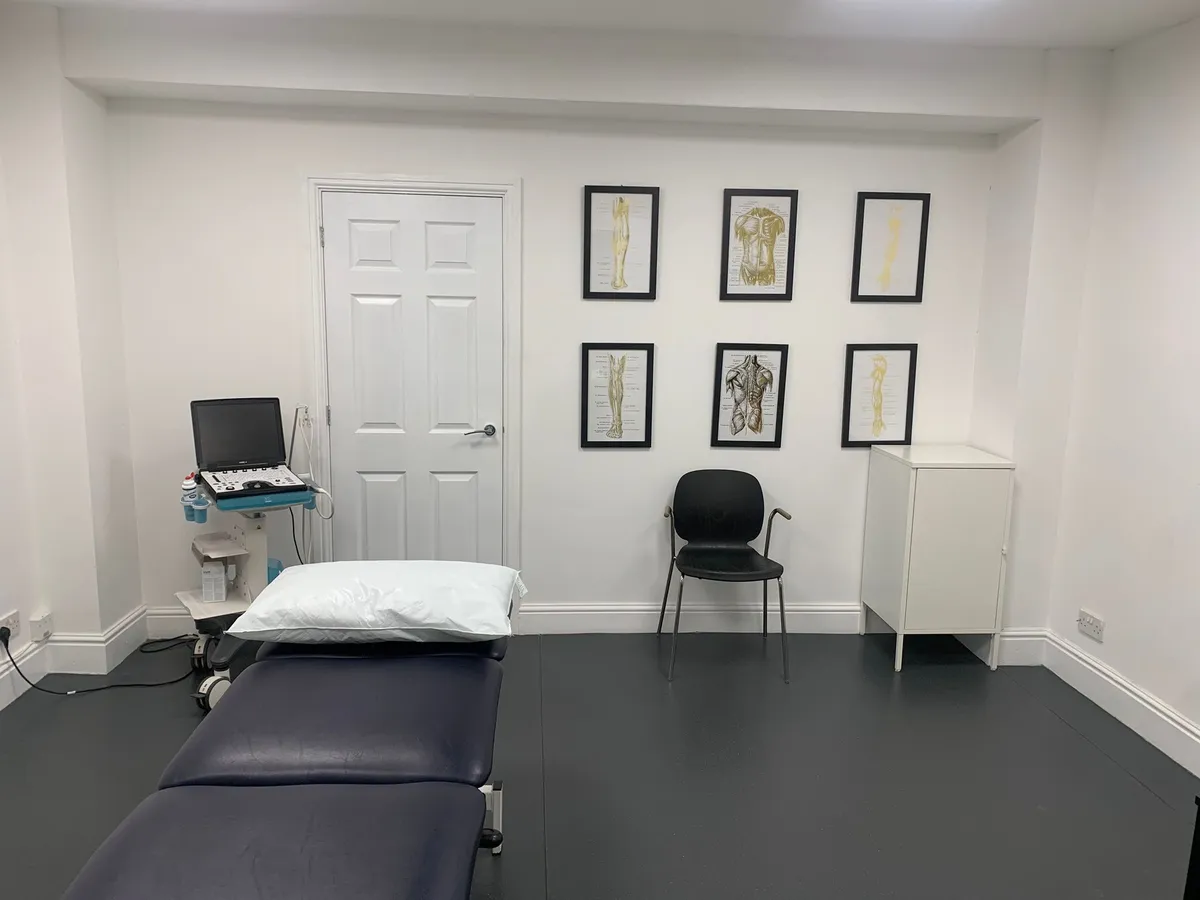
We start with a hands-on examination of the knee to work out which structures are actually causing the pain. Where it would change the treatment plan, we can scan the joint on-site with diagnostic ultrasound — we're the only clinic in south Cumbria with this in-house, so there's no referral or wait to see what's going on underneath the pain.
From there, treatment depends on the cause. Patellofemoral pain and early-stage arthritis usually respond well to a structured physiotherapy programme focused on strengthening. If there's more established osteoarthritis and stairs have become a genuine daily problem, a hyaluronic acid injection can help lubricate the joint, or a steroid injection can settle a flare-up of inflammation — both are given under ultrasound guidance so the medication goes exactly where it's needed. If the pain is centred on the tendon rather than the joint itself, that's a different picture again, and we'd talk through whether shockwave therapy at our Barrow clinic is appropriate. Nobody leaves an assessment without a clear idea of what's causing the pain and what the realistic options are — we don't promise outcomes, but we do explain them.
Frequently Asked Questions
Does knee pain on stairs always mean arthritis?
No. Arthritis is one possible cause, but plenty of people with patellofemoral pain or tendon irritation get exactly the same symptom, often at a much younger age. An assessment is the only reliable way to tell the difference.
Should I stop using stairs altogether?
Generally no — complete rest tends to make the surrounding muscles weaker, which can make the pain worse over time. Modifying how you use stairs (slower, one step at a time, holding a rail) while you get it assessed is usually a better middle ground.
Do I need a scan before treatment can start?
Not always. Many cases are clear from a physical examination alone. A scan is useful when the diagnosis isn't obvious, or when it would change which treatment is offered.
How quickly can I get seen in Barrow or Millom?
We run clinics at both Barrow-in-Furness and Millom, alongside patients from Dalton-in-Furness, Ulverston and Askam. Get in touch and we'll find the next available assessment slot.
Do I need to travel out of south Cumbria for a scan?
No. We're the only clinic in south Cumbria with diagnostic ultrasound on-site, so if a scan would help clarify what's going on, it can usually be done at the same clinic as your assessment rather than a separate referral elsewhere.
assessment.
Call or book online, and we'll book you in at the clinic that offers the treatment you need. Current prices are on the price list.
Book onlineOr call 07849 617337. Barrow-in-Furness: FAB Fitness and Health Club, Hollywood Park, Hindpool Road. Millom: 12 Wellington Street.