
Why Does My Knee Still Hurt After a Steroid Injection?
If your knee still hurts after a steroid injection, the most common reason is timing and expectation: the injection needs a few days to take effect, and it treats the inflammation around the joint rather than the underlying wear causing it. For many people with knee osteoarthritis, one injection calms things down for weeks or months but doesn't stop the pain coming back, because the joint itself hasn't changed. That's not a sign the injection "didn't work" — it's usually exactly what a steroid injection is designed to do, and no more than that.
What a steroid injection actually does
A steroid injection puts an anti-inflammatory medication directly into or around the joint. It's aimed at swelling and irritation, not at worn cartilage, bone spurs, or a degenerating meniscus. That's why it can bring real relief from a flare-up while leaving the mechanical problem — the actual arthritis — exactly as it was before.
Most people notice the effect building over 3-7 days rather than immediately, and a small number get a short-lived flare of soreness in the first day or two before it settles. If your knee feels no different, or slightly worse, in the first few days, that's usually the injection still bedding in rather than a sign it hasn't worked at all. It's when there's been no change after a week or two, or the pain is clearly worse than before the injection, that it's worth being reassessed rather than simply waiting longer.
Why the pain can come back
- The underlying arthritis is still there. Steroid dampens inflammation; it doesn't rebuild cartilage, smooth a bone spur, or realign the joint. Once the anti-inflammatory effect fades, the mechanical problem that was there before the injection is still there.
- The injection wasn't placed exactly where the problem is. Knees have several separate compartments and pain sources — the joint line itself, a bursa sitting over the knee cap, or a meniscal tear — and an injection that lands in the wrong spot won't touch the actual source, even though it may still ease general swelling.
- There's more than one thing going on. Arthritis, a bursa, and tendon irritation around the knee can all coexist in the same joint, so treating one doesn't necessarily quieten the others. This is common enough that it's one of the first things worth checking for if relief has been partial or short-lived.
- The effect has simply worn off. Steroid relief is usually weeks to a few months, not permanent — that's an expected part of how the treatment works, not a failure of it.
Getting a clearer picture before trying again
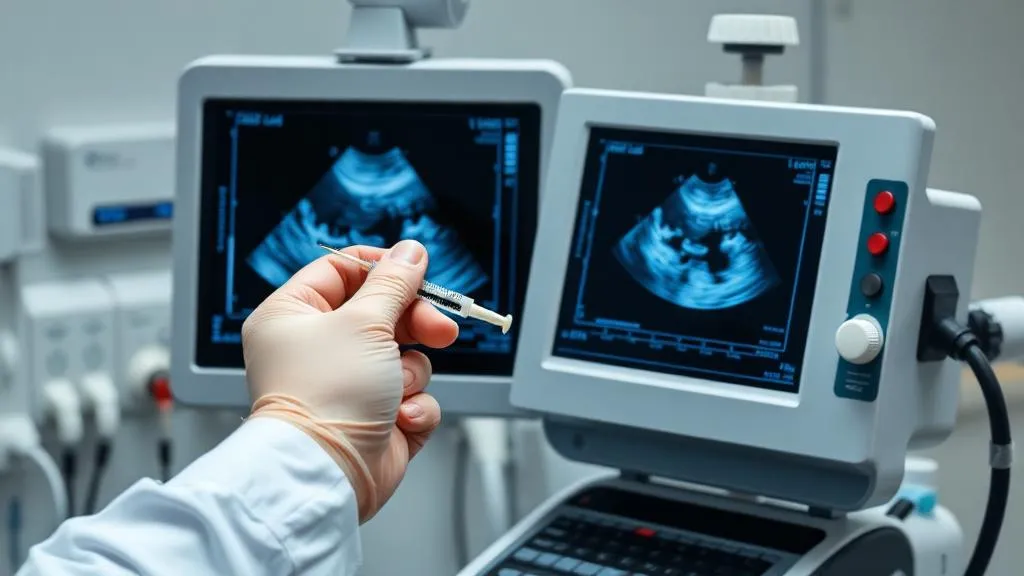
At GD Health Clinic we're the only clinic in south Cumbria with diagnostic ultrasound alongside ultrasound-guided injections, which means we can actually look at the knee — the joint line, the bursae, the tendons around it — before deciding what to do next, rather than repeating the same injection and hoping for a better result. Seeing what's actually inflamed, worn, or irritated lets the next step be aimed at the right structure instead of the most likely one.
In practice that usually means a short assessment where we ask about exactly where the pain is, what makes it worse (stairs, standing, first thing in the morning), and how long relief lasted after the last injection, followed by a scan of the joint if it would change what we'd recommend. That combination is what tells us whether a repeat steroid injection, a different injection, or a different approach altogether makes the most sense.
The alternatives worth knowing about
For ongoing knee osteoarthritis, the options usually discussed alongside a repeat steroid injection are hyaluronic acid injections and physiotherapy, and the two are often used together rather than as a straight either-or choice.
Hyaluronic acid works differently to steroid — it's a joint lubricant rather than an anti-inflammatory, aimed at people with degenerative joint pain who want to stay active and delay or avoid joint replacement, rather than at an acute flare-up. It tends to suit knees where the wear itself, rather than active inflammation, is the main driver of the pain.
Physiotherapy doesn't replace either injection, but building strength and control around the knee changes how much load goes through the joint day to day, which is often part of why pain settles for longer once it's in place. For a lot of people the combination of an accurately placed injection and a period of targeted physiotherapy holds up better than either on its own.
When to get it looked at rather than repeat the injection
It's worth booking an assessment rather than simply requesting another injection if the pain came back within a few weeks, if it's clearly worse on stairs or after standing for a while, or if you've had more than one or two injections without lasting benefit. That pattern usually means the joint needs a proper look rather than the same treatment repeated on the assumption it'll work better this time.
Local to Barrow, Millom and south Cumbria
We see knee pain from across south Cumbria — Barrow-in-Furness, Millom, Dalton-in-Furness, Ulverston and Askam — and being the only clinic in the area combining diagnostic ultrasound with guided injections means patients don't need to travel to a city for that kind of assessment. Clinics run from FAB Health and Fitness club in Barrow-in-Furness and from 12 Wellington Street in Millom, so an assessment and a scan can usually happen in the same appointment rather than needing separate referrals.
FAQs
How long should a steroid injection take to work?
Most people notice improvement building over 3-7 days. If there's been no change at all after a couple of weeks, it's worth getting the knee reassessed rather than waiting longer.
Is it normal for a steroid injection to wear off?
Yes. Relief typically lasts weeks to a few months. It's an anti-inflammatory, not a cure for arthritis, so pain returning as the effect fades is expected rather than a sign something went wrong.
Can I just have another steroid injection if this one didn't help enough?
You can, but it's worth understanding why the first one didn't fully help before repeating it — a scan can show whether the pain is coming from the joint itself, a bursa, or something else nearby, so the next injection (or a different treatment altogether) is aimed at the right structure.
What's the alternative to repeat steroid injections for knee arthritis?
Hyaluronic acid injections and physiotherapy are the two most commonly considered alternatives, often used alongside each other rather than instead of an injection. An assessment, with a scan if useful, helps work out which combination fits your knee.
Do I need a scan before another injection?
Not always, but if relief has been partial or short-lived more than once, a scan is usually what tells us whether we're treating the right structure, rather than repeating a guess.
assessment.
Call or book online, and we'll book you in at the clinic that offers the treatment you need. Current prices are on the price list.
Book onlineOr call 07849 617337. Barrow-in-Furness: FAB Fitness and Health Club, Hollywood Park, Hindpool Road. Millom: 12 Wellington Street.