
What Helps Lower Back Pain That Keeps Coming Back?
Lower back pain that keeps coming back is usually driven by how the joints and muscles around your spine are moving day to day, not by one single injury. The most useful first step is an assessment that looks at your movement and posture — rather than treating each flare-up as a one-off and hoping it doesn't return.
If you're in Barrow-in-Furness, Millom, Dalton-in-Furness, Ulverston, Askam or anywhere else in south Cumbria and you've had the same ache flare up for the third or fourth time this year, here's what's actually going on and what tends to help.
Why does it keep coming back?
A back that "goes" every few months, rather than staying consistently bad, usually points to one of a few patterns:
- Muscle and joint stiffness that never fully resolves. The pain settles enough to stop bothering you, but the underlying stiffness or weakness that caused it doesn't get addressed — so the next awkward lift, long drive or heavy gardening session tips it over again.
- Desk and driving postures. Long periods sitting, especially with a poor workstation setup, load the lower back and hips in a way they're not built to sustain. This is one of the most common causes we see in working-age adults across south Cumbria.
- Early degenerative changes. From the 40s onwards, the joints and discs in the spine naturally start to show wear, similar to what happens in a knee or hip. This doesn't mean anything is "wrong" with you, but it can mean the back is more easily provoked and takes longer to settle.
- Deconditioning after a first episode. People often move less after their first bout of back pain, out of caution. Less movement means the supporting muscles get weaker, which makes the next flare-up more likely, not less.
None of this means you should just live with it. It means the pain is a pattern worth investigating properly rather than treating each flare-up as an isolated event.
When it's worth getting checked rather than waiting it out
Most recurring lower back pain is mechanical — it comes from how the joints, discs and muscles are working together — and responds well to the right hands-on treatment and exercise. It's worth booking an assessment if:
- The pain has come back three or more times in the past year
- It's starting to affect work, sleep, or things you'd normally do without thinking
- You've had pain, numbness or tingling spreading into a leg
- Rest isn't helping as much as it used to, or each flare-up feels slightly worse than the last
This is general information, not a diagnosis — anyone with spreading leg symptoms, or pain alongside unexplained weight loss, fever or loss of bladder/bowel control, should see a GP promptly. For everyday recurring back pain, an assessment at a clinic is the right next step.
What actually helps
An assessment that finds the actual driver
Two people can describe the same "lower back pain" and mean completely different things — one might have stiff hip joints referring pain into the back, another might have weak core and glute muscles letting the lower spine take too much load. A proper assessment looks at how you move, not just where it hurts, before recommending anything.
Physiotherapy and a movement plan
For most recurring back pain, physiotherapy is the main tool — hands-on treatment to ease the current flare-up, combined with a graded exercise plan that builds up the strength and control that stops it recurring. This is the piece that's usually missing when back pain keeps returning: treating the flare-up without addressing why it keeps happening.
Seeing what's going on with a scan
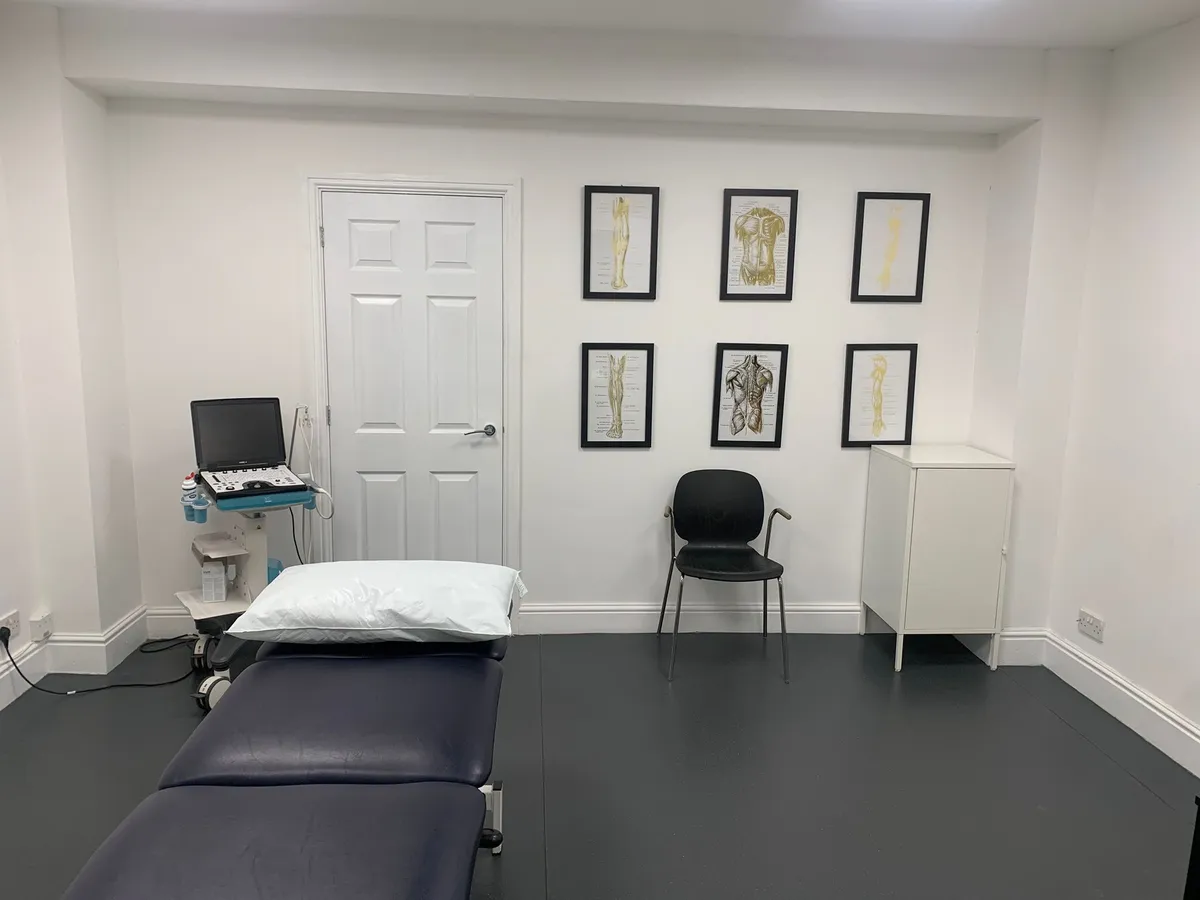
GD Health Clinic is the only clinic in south Cumbria offering diagnostic ultrasound alongside hands-on assessment. Where it's useful, a scan can help confirm which structures are involved before deciding on treatment, rather than treating on a best guess.
Sports massage for the muscular side of things
Sports massage can help loosen the muscle tightness that builds up around a recurring back problem, particularly useful alongside — not instead of — a physiotherapy exercise plan.
If your work is part of the problem
If your back pain tracks closely with your work — a desk job, long spells of driving, or manual handling — a workstation (DSE) assessment looks at the actual setup that's loading your back day after day, so the fix addresses the cause and not just the symptom.
What to expect at your first appointment
Your clinician will start by asking about the history of the problem — when it first started, how often it flares up, and what tends to trigger it, whether that's a specific movement, a long day at a desk, or nothing you can pin down. From there, they'll assess how your spine, hips and surrounding muscles are actually moving, looking for the stiffness, weakness or movement pattern that's letting the pain keep coming back.
If a scan would add anything useful, it can be done in the same appointment using diagnostic ultrasound. You'll leave with a clear explanation of what's driving your pain and a plan — usually a short course of hands-on treatment plus exercises to do between sessions — rather than a generic leaflet or a "just rest it" response. Nothing is one-size-fits-all: a desk-based back pain pattern gets a different plan to one caused by early joint wear or a heavy manual job.
Local support in Barrow, Millom and south Cumbria
GD Health Clinic runs from two sites: FAB Health and Fitness club, Hollywood Park, Barrow-in-Furness and 12 Wellington Street, Millom, seeing patients from Dalton-in-Furness, Ulverston, Askam and the wider south Cumbria area. Whichever site is closer, the same assessment-first approach applies.
Frequently asked questions
Is recurring lower back pain a sign of something serious?
Usually not — most recurring back pain is mechanical, related to how the joints and muscles are working, and responds well to physiotherapy and exercise. Spreading leg symptoms, unexplained weight loss or loss of bladder/bowel control are the exceptions worth seeing a GP about promptly.
Should I rest or keep moving during a flare-up?
Complete rest for more than a day or two tends to slow recovery and contributes to the weakness that makes the next flare-up more likely. Gentle, guided movement is generally more helpful — a physiotherapist can advise what's appropriate for your specific pain.
Will I need a scan?
Not always. Many cases of recurring back pain can be assessed and treated through movement testing alone. A scan is used where it will actually change the treatment plan, not as a routine step.
How long does it take for physiotherapy to help with a recurring problem?
It varies with how long the pattern has been going on and how consistent you are with the exercise plan. Many people notice the current flare-up settling within a few sessions, with the exercise programme continuing longer to reduce how often it comes back.
Do you treat lower back pain at both the Barrow and Millom clinics?
Yes — physiotherapy assessment and treatment for lower back pain is available at both sites.
assessment.
Call or book online, and we'll book you in at the clinic that offers the treatment you need. Current prices are on the price list.
Book onlineOr call 07849 617337. Barrow-in-Furness: FAB Fitness and Health Club, Hollywood Park, Hindpool Road. Millom: 12 Wellington Street.