
Occupational Health Assessments in Barrow and Millom: What Employers Need to Know
If you're an employer in Barrow-in-Furness or Millom trying to work out where to send staff for a fitness-for-work check, a pre-employment medical, or an assessment after a sickness absence, you don't need to send anyone out of south Cumbria. GD Health Clinic offers occupational health assessments from both its Barrow and Millom locations, with a musculoskeletal focus that's useful for physically demanding roles.
What is an occupational health assessment?
An occupational health assessment is a check carried out by a clinician to establish whether someone is fit to do a particular job, or to support an employer's decision-making around sickness absence, a return to work, or a new starter with a health condition to declare. It isn't a general GP appointment — it's focused specifically on the demands of the role and the person's ability to meet them safely.
For employers in industries with physical work — manual handling, warehouse and yard work, trades, care work — this usually means looking closely at joints, muscles and movement, which is where GD Health's background in musculoskeletal assessment is relevant.
When employers in Barrow and Millom typically need one
- Pre-employment checks — confirming a new starter can safely carry out the physical requirements of the role before they start.
- Fitness-for-work assessments — for an existing employee returning after injury, surgery, or a period of ill health.
- Sickness absence support — an independent clinical opinion on what's realistic in terms of duties, adjustments, or timescale.
- Ongoing roles with physical demands — periodic checks where a job involves lifting, repetitive movement, or manual handling.
Employers also ask GD Health about display screen equipment (DSE) assessments for office-based staff experiencing discomfort at a desk — a different but related service worth knowing about if your workforce is a mix of site-based and office-based roles.
What happens at the assessment
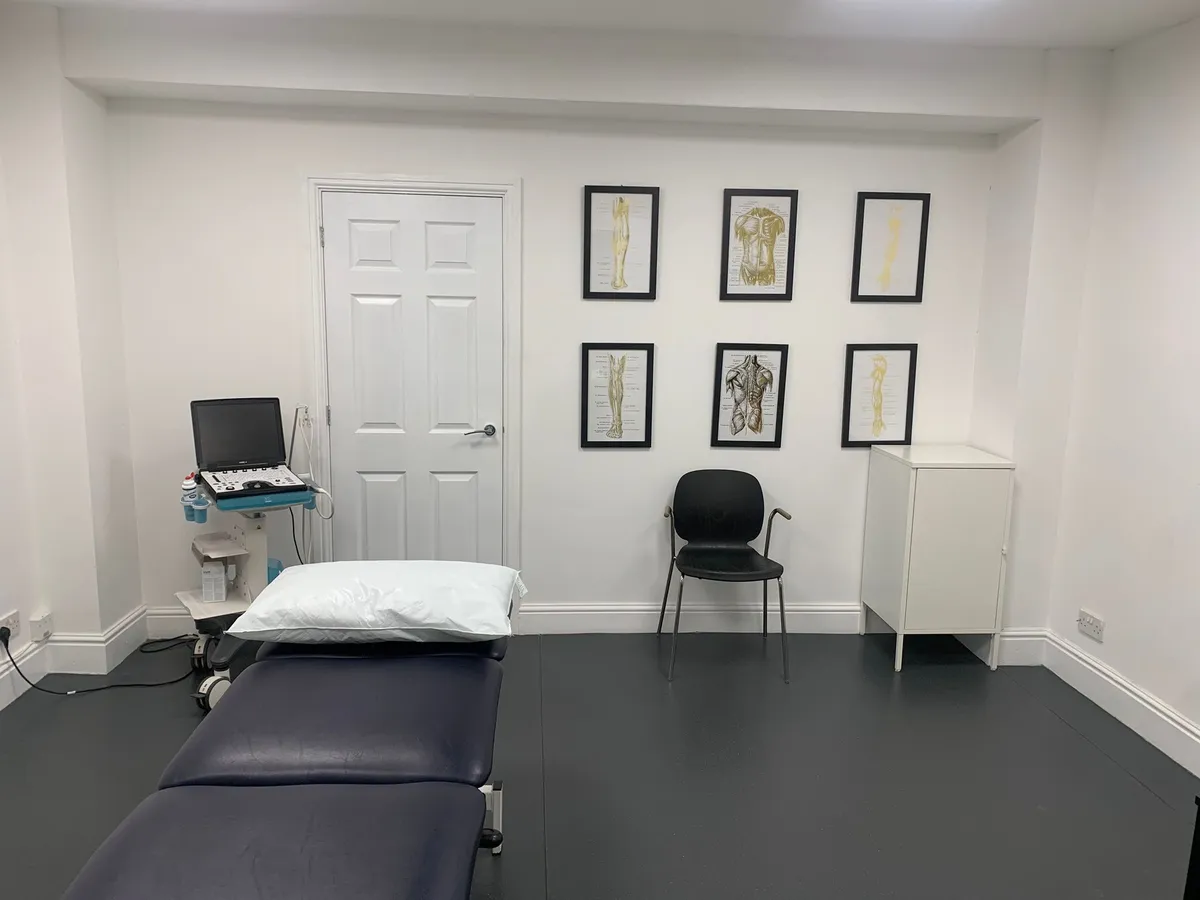
The employee is seen for a one-to-one assessment covering relevant medical history and a physical examination focused on the demands of their role — for example grip strength and shoulder movement for a manual role, or spinal movement and lifting capacity for warehouse work. Because GD Health also runs diagnostic ultrasound in-house, a joint or tendon concern that comes up during the assessment can be looked at properly rather than referred elsewhere and delayed.
The employer receives a report addressing the specific question asked — fit for the role, fit with adjustments, or not currently fit — without unnecessary personal medical detail being shared beyond what's relevant to the workplace decision.
Barrow and Millom, not a trip out of the area
GD Health Clinic runs from FAB Health and Fitness Club, Hollywood Park, Barrow-in-Furness, and 12 Wellington Street, Millom — so employers across Barrow-in-Furness, Millom, Dalton-in-Furness, Ulverston and Askam can get staff seen locally rather than booking them into an occupational health provider in Preston, Carlisle or further afield. For businesses trying to manage a return-to-work timeline, not losing a day to travel matters.
Why the musculoskeletal angle matters
A lot of occupational health need in this area comes down to joints and soft tissue — a back that's been aggravated by lifting, a shoulder that's been slow to recover after a manual role, a knee that flares up on a physical shift. GD Health's day-to-day work is joint injections, physiotherapy and shockwave therapy for exactly these problems, so an occupational health assessment here isn't a generic tick-box exercise — if a genuine musculoskeletal issue is found, there's a clear, local next step for the employee rather than a referral into a queue elsewhere.
The kind of roles this usually comes up for
Barrow-in-Furness has a lot of physically demanding work — heavy engineering and shipyard trades, warehousing and logistics, construction, care work, and agriculture out towards Dalton-in-Furness and Ulverston. Millom and the wider south Cumbria coast add fishing, farming and outdoor trades into the mix. These are jobs where a joint or back problem isn't a minor inconvenience — it can mean someone genuinely can't do the role safely, and an employer needs a clear, honest answer rather than a generic sick note.
That's the gap an occupational health assessment is meant to fill: an independent, clinically-grounded view of what a specific person can and can't do in a specific role, rather than either side guessing.
If the assessment finds a genuine problem
Sometimes an occupational health assessment surfaces something that needs proper investigation rather than a one-off opinion — a shoulder that's been aggravated by years of overhead work, a knee that's been carrying more load than it should, a back that flares under manual handling. Because GD Health runs its own diagnostic ultrasound alongside joint injections and physiotherapy, an employee doesn't necessarily have to wait weeks for a referral elsewhere to get a proper look at what's going on. That's useful for both sides — the employer gets a realistic timescale, and the employee gets a route to actually dealing with the problem rather than just being signed off.
None of this is about pushing treatment where it isn't needed. Plenty of assessments simply confirm someone's fit for the role and that's the end of it. The point is having a proper musculoskeletal assessment behind the opinion when it matters, not a five-minute box-ticking exercise.
Working with adjustments, not just pass or fail
An occupational health opinion doesn't have to be binary. Often the useful outcome for an employer is a practical adjustment — reduced lifting for a defined period, a phased return over a few weeks, avoiding a specific repetitive movement while something settles down. Getting that detail right, rather than a blanket "fit" or "unfit", is usually what actually gets someone back to work sooner and keeps a business fully staffed rather than carrying an extended absence.
FAQs
Do you offer occupational health assessments for both Barrow and Millom employers?
Yes — assessments can be carried out at either the Barrow-in-Furness or Millom location, whichever is easier for your employee.
Can you assess staff with a physical, manual job specifically?
Yes. Musculoskeletal assessment for physically demanding roles is a particular strength given GD Health's background in joint and muscle treatment.
What does the employer receive after the assessment?
A report addressing the specific question asked (fitness for role, adjustments needed, or timescale), focused on what's relevant to the workplace decision.
Do you also do DSE assessments for office staff?
Yes, DSE workstation assessments are available separately for employees with desk-based discomfort — see the DSE assessment page for details.
How do we book an assessment for an employee?
Call or book online — see the details below. It's worth mentioning the role and what you need the assessment to cover so the right amount of time is booked.
Is this only for new starters, or can existing staff be assessed too?
Both. Pre-employment checks are one use, but existing employees are just as often assessed — after an injury, a period of sickness absence, or when a role's physical demands have changed and an employer wants an up-to-date, independent view before deciding what's next.
assessment.
Call or book online, and we'll book you in at the clinic that offers the treatment you need. Current prices are on the price list.
Book onlineOr call 07849 617337. Barrow-in-Furness: FAB Fitness and Health Club, Hollywood Park, Hindpool Road. Millom: 12 Wellington Street.