
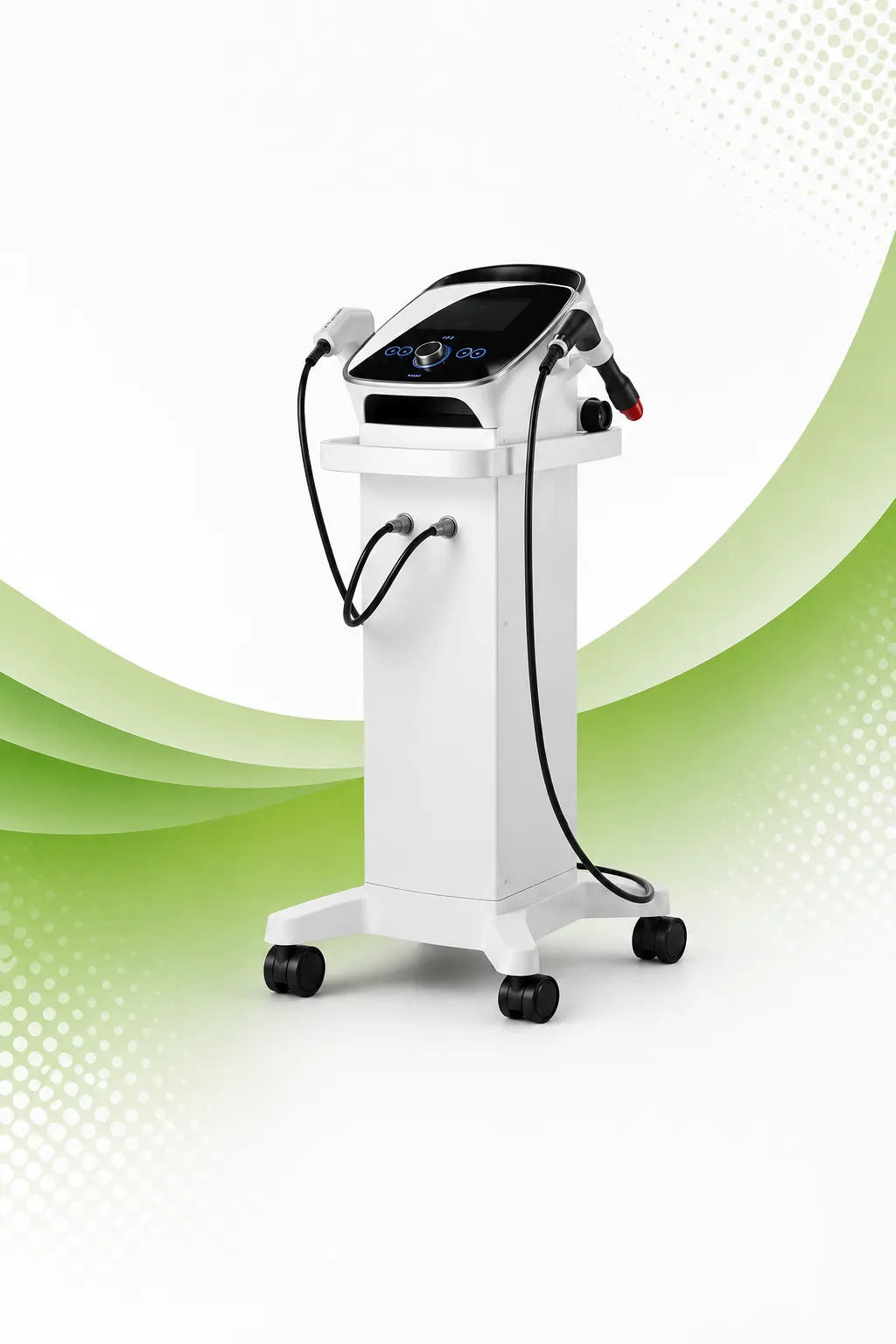
Shockwave Therapy for Achilles Tendon Pain: How It Works and What to Expect
Achilles tendon pain that's stuck around for weeks — sore first thing in the morning, tight after a run, aching by the end of a shift on your feet — often doesn't respond to rest alone. Shockwave therapy is one of the treatments GD Health Clinic uses specifically for this kind of stubborn tendon pain, and it's available at our Barrow-in-Furness clinic.
Here's what it actually involves, why it's used for Achilles pain, and what a course of treatment looks like.
What is shockwave therapy?
Shockwave therapy (also called radial shockwave or extracorporeal shockwave therapy) uses a handheld device to deliver pulses of acoustic energy into the tendon through the skin. It's applied directly over the sore area — in this case, the Achilles tendon at the back of the heel or a little higher up the leg, depending on where the pain sits.
The idea behind it is to stimulate the tendon's own repair process. Tendons that have been irritated for a long time — what's often called tendinopathy — tend to stop healing properly on their own. Shockwave is thought to kick-start that process again, encouraging blood flow and new tissue formation in an area that's become a bit stuck.
Why Achilles tendon pain is a common reason people try it
The Achilles is one of the tendons most likely to develop this kind of long-term, low-grade pain — partly because it takes a lot of load with every step, and partly because the blood supply to the middle part of the tendon isn't great, which makes it slow to heal by itself. That's why Achilles pain that's been present for more than six weeks often needs more than just rest and stretching.
People who come to us with this tend to describe the same pattern: stiffness first thing in the morning that eases off once they're moving, then an ache that builds again after standing, walking or running. It's common in runners, but plenty of people who don't run at all develop it too — through work that involves a lot of time on their feet, a change in footwear, or simply as part of the general wear and tear that comes with being more active later in life.
What actually happens at an appointment
Appointments run for 45 minutes and cost £80. Phoebe, who leads shockwave treatment at GD Health, will start by checking exactly where the pain is coming from before applying the shockwave device to the tendon. The treatment itself is a series of pulses delivered over a few minutes — it's not comfortable, particularly on an already sore tendon, but sessions are short and most people tolerate it without needing anything else on the day.
You can walk in and out the same day. It's common to feel a bit sore or achy for 24–48 hours afterwards, similar to how a tendon might feel after a harder-than-usual walk or run.
There's no downtime built into the appointment itself — most people drive themselves to and from the clinic and get on with the rest of their day. The main thing to plan around is the soreness afterwards rather than the appointment itself: if you've got a long day on your feet or a run planned, it's worth booking your session for a point in the week where a slightly achy tendon for a day or two won't get in the way.
What a course of treatment looks like
Shockwave isn't a one-off fix — it's delivered as a course, usually 4 to 6 sessions spaced 7 to 10 days apart. That gap matters: it gives the tendon time to respond to each session before the next one. Skipping around or compressing the sessions closer together isn't how it's designed to work.
Most people notice whether it's helping somewhere around the third or fourth session, though everyone's tendon responds at a different pace. We'll check in with you as the course goes on to see how things are progressing.
Is it right for your Achilles pain?
Shockwave tends to suit tendon pain that's been present for a while rather than a fresh injury — if you've strained your Achilles in the last few days, it's usually better to start with a proper assessment first rather than jumping straight to shockwave. It's also not suitable for everyone (for example, if you're on certain blood-thinning medication, or if there's a chance the tendon has actually torn rather than just being irritated), which is why we start with an assessment rather than booking shockwave sight unseen.
At that first assessment we'll look at the tendon, ask about how the pain behaves day to day, and — if it would help clarify what's going on — scan it, since GD Health is the only clinic in south Cumbria with diagnostic ultrasound on site. That means you're not guessing whether shockwave is the right next step; you'll know before you commit to a course.
This matters more than it might sound. Achilles pain can come from a few different sources — the tendon itself, the small fluid-filled sac (bursa) near where it attaches to the heel bone, or occasionally something else altogether — and shockwave isn't the right tool for all of them. Getting a clear picture at the start saves you paying for a course of sessions that were never going to be the right match for what's actually going on.
Shockwave in Barrow-in-Furness
Shockwave therapy at GD Health is currently only available at our Barrow-in-Furness clinic, based at the FAB Health and Fitness club, Hollywood Park. We see people travelling in from Millom, Ulverston, Dalton-in-Furness and Askam for it, since it isn't widely available elsewhere in south Cumbria without travelling further afield to a city clinic.
Other options if shockwave isn't the right fit
Shockwave isn't the only route for Achilles tendon pain. Depending on what we find at assessment, physiotherapy, activity modification, or — for some joint and tendon conditions — a guided injection may be more appropriate. We'll talk through the options with you rather than assuming shockwave is automatically the answer.
FAQs
How many shockwave sessions will I need for Achilles pain?
Most courses run to 4–6 sessions, spaced 7–10 days apart, though this can vary depending on how the tendon responds.
Does shockwave therapy for the Achilles hurt?
It's uncomfortable rather than unbearable — most people describe a sharp, pulsing sensation during treatment that settles quickly afterwards. Some soreness for a day or two after each session is normal.
Can I keep walking and exercising during a course of shockwave?
Usually yes, though we'll advise on activity levels around each session based on how your tendon is responding — this is covered at your assessment and reviewed as the course goes on.
Do I need a scan before starting shockwave therapy?
Not always, but it can help confirm what's actually going on in the tendon before committing to a course, particularly if the diagnosis isn't clear-cut. We can do this at your assessment.
Is shockwave available anywhere other than Barrow-in-Furness?
At GD Health, shockwave therapy is currently only offered at our Barrow-in-Furness clinic.
How much does a course of shockwave therapy cost?
Each session is £80. A full course is usually 4–6 sessions, so it's worth budgeting for the course rather than a single appointment when you're weighing it up.
Will shockwave definitely fix my Achilles tendon pain?
No treatment can promise that. Shockwave is one option that can help stubborn tendon pain respond and settle, but how well it works varies from person to person, which is why we assess first rather than promising a result upfront.
assessment.
Call or book online, and we'll book you in at the clinic that offers the treatment you need. Current prices are on the price list.
Book onlineOr call 07849 617337. Barrow-in-Furness: FAB Fitness and Health Club, Hollywood Park, Hindpool Road. Millom: 12 Wellington Street.