
What Does a Course of Shockwave Therapy Actually Look Like?
The short answer
A typical course of shockwave therapy at GD Health Clinic is 4 to 6 sessions, spaced 7 to 10 days apart, each around 45 minutes, at £80 a session. It's run from our Barrow-in-Furness clinic only, led by Phoebe. If you're wondering what actually happens across those weeks — rather than just what one appointment feels like — here's how a course is structured from first session to last.
Why it's a course, not a one-off
Shockwave therapy works by delivering acoustic shockwaves through the skin into stubborn, poorly-healing tendon tissue, stimulating blood flow and the body's own repair response. That repair process takes time — the tendon needs to respond to one session before it's ready for the next dose of stimulus. That's why it's never sold as a single treatment: the sessions build on each other, with the gap between them giving the tissue a chance to start remodelling before it's stimulated again.
It's aimed specifically at long-standing tendon and soft tissue pain that hasn't settled with rest, activity changes or a first course of physiotherapy — tennis elbow, Achilles pain, plantar fasciitis and similar stubborn, "won't budge" tendon problems.
What conditions a course is typically used for
Shockwave tends to come up once more conservative options haven't shifted the pain on their own. The tendons we see it help with most often are:
- tennis elbow that's been grumbling for months rather than weeks
- Achilles tendon pain, especially in runners and regular walkers
- plantar fasciitis — heel pain that's worst first thing in the morning
- shoulder tendon pain that hasn't settled with rest or a loading programme
- patellar tendon pain, just below the kneecap
The common thread is time: shockwave is generally offered once a tendon problem has been present for at least six to eight weeks and hasn't responded to rest or a first round of physiotherapy, rather than as a first-line option for a fresh strain.
What happens at the first session
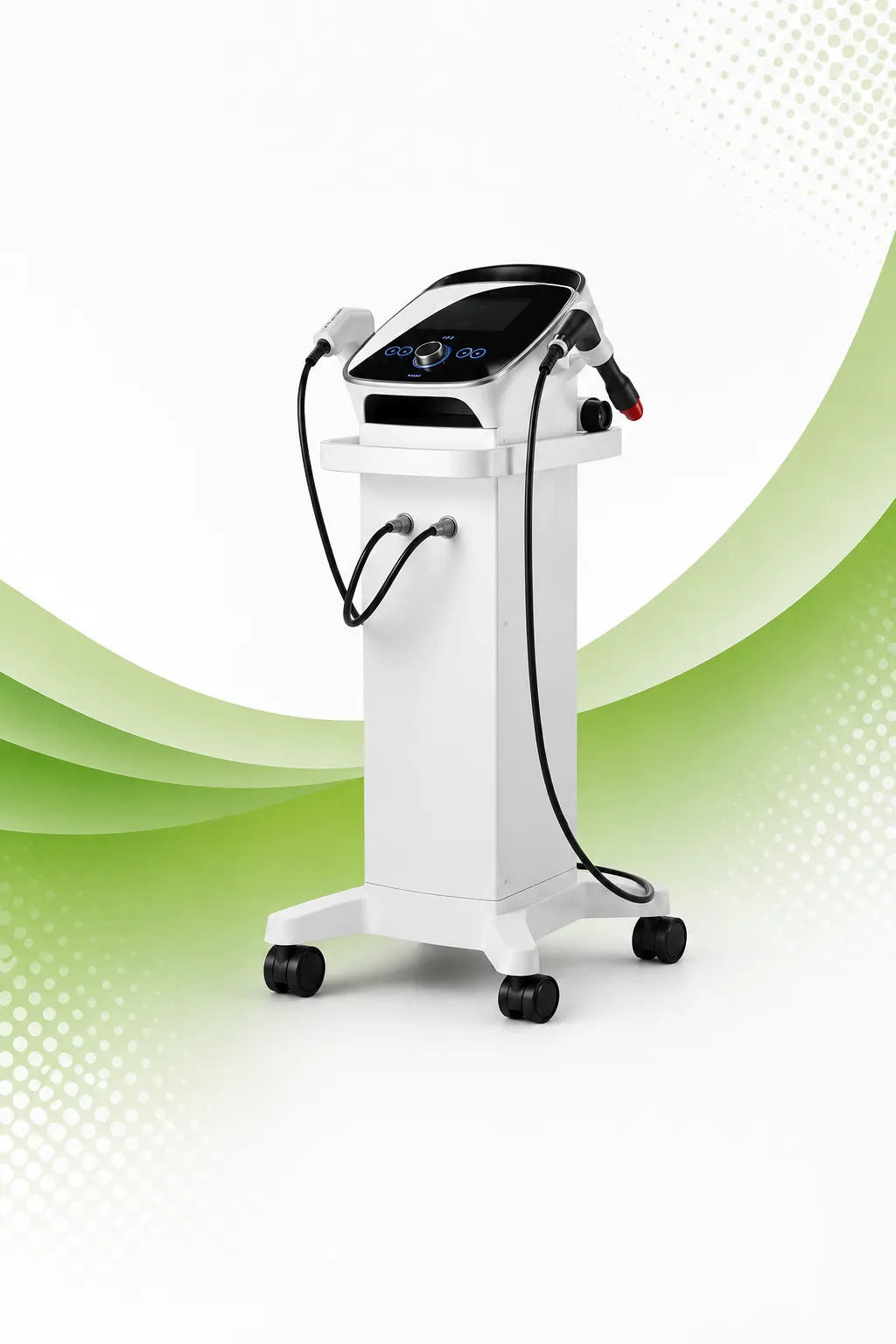
Before any shockwave is delivered, Phoebe checks the area, confirms it's the right treatment for what's going on, and talks through what to expect. The treatment itself involves a handheld device pressed against the skin over the painful area, delivering pulses of acoustic energy. Most people describe it as an uncomfortable, slightly sharp sensation while it's running rather than something painful — it's brief, and the discomfort tends to ease off quickly once the session ends. The appointment itself is around 45 minutes including the assessment and treatment.
What happens between sessions
It's normal to feel a bit sore or achy in the treated area for a day or two afterwards — that's part of the response the treatment is trying to trigger, not a sign anything's gone wrong. You'll usually be given some guidance on activity in between: not necessarily complete rest, but avoiding the specific movements that aggravate the area while the tendon is responding. Most people carry on with day-to-day activity and work between sessions.
Sessions are spaced 7-10 days apart rather than back-to-back. That gap matters — it gives the tendon time to start the repair process the shockwave has triggered before the next session adds another round of stimulus.
How many sessions you'll actually need
Most courses run 4 to 6 sessions, but where you land in that range depends on how long the problem has been going on, how the tendon has been responding session to session, and what condition is being treated. Some people notice a difference partway through the course; for others, particularly with pain that's been there for many months, the improvement builds more gradually and is only clear by the end of the course. Phoebe will review progress as you go rather than committing you to a fixed number up front.
Getting the diagnosis right before you start
Because tendon pain, joint pain and bursitis can feel similar from the outside, it's worth being sure shockwave is actually the right tool before starting a course. We're the only clinic in south Cumbria offering diagnostic ultrasound, so where it's useful we can see what's happening in the tissue rather than treat on symptoms alone. Not every case needs a scan, but for pain that's dragged on for months, or hasn't responded to a first round of physiotherapy, it can save you starting a course that isn't the right fit.
Combining it with physiotherapy
Physiotherapy and shockwave therapy work well together rather than as alternatives — shockwave stimulates the tendon's repair response, and a structured loading programme gives it something to rebuild against. For a lot of people that combination, rather than either on its own, is what actually shifts pain that's been stuck for months.
What it costs and where it's available
Each session is £80, at our Barrow-in-Furness clinic at FAB Health and Fitness club, Hollywood Park — shockwave therapy isn't currently offered at our Millom site. For anyone in Millom, Dalton-in-Furness, Ulverston or Askam, the assessment can still be booked locally; the shockwave course itself, if that's the right next step, means a trip to Barrow for each session.
Local support across south Cumbria
We see people travel in for shockwave courses from right across the area — Barrow-in-Furness itself, Millom, Dalton-in-Furness, Ulverston and Askam. It's currently the only shockwave machine between Workington and Kendal, so for a lot of people locally, a trip to our Barrow clinic every 7-10 days is still shorter than travelling further afield for the same treatment. If getting to Barrow repeatedly is a genuine barrier, it's worth raising at the assessment — Phoebe can talk through whether a loading-focused physiotherapy programme, available at both our Barrow and Millom clinics, is a reasonable alternative starting point.
Frequently asked questions
How many shockwave sessions will I need?
Most courses are 4 to 6 sessions, 7-10 days apart. The exact number depends on how long you've had the problem and how it responds as you go.
Does shockwave therapy hurt?
It can feel uncomfortable during the session, especially over a sensitive spot, but it's brief and most people manage it well. Any soreness afterwards usually settles within a day or two.
Can I keep working and exercising during the course?
Usually yes. You'll be guided on which movements to ease off between sessions, but most people continue day-to-day activity and work throughout.
What if I don't notice a difference after one or two sessions?
That's common and not a reason to stop — the repair process it's triggering builds over the full course, and for longer-standing pain the improvement is often only clear towards the end.
Do I need a GP referral first?
No — you can book an assessment directly with us to check shockwave is the right fit before starting a course.
What if I miss a session or need to reschedule?
Life gets in the way sometimes — just let the clinic know as early as you can. Missing the odd session by a few days isn't a disaster, though sticking close to the 7-10 day spacing generally gives the best result, so it's worth trying to keep sessions roughly on schedule where you can.
assessment.
Call or book online, and we'll book you in at the clinic that offers the treatment you need. Current prices are on the price list.
Book onlineOr call 07849 617337. Barrow-in-Furness: FAB Fitness and Health Club, Hollywood Park, Hindpool Road. Millom: 12 Wellington Street.