
Shockwave Therapy vs Rest and Ice: Why Tendon Pain Doesn't Just Go Away on Its Own
If you've been resting a sore Achilles, tennis elbow or shoulder tendon for weeks (or months) and it still hasn't settled, you're not doing anything wrong — tendon pain that's stuck around this long usually needs more than rest and ice to shift. Shockwave therapy works on the tendon directly, rather than just waiting for it to calm down, which is why it's often the next step when rest alone hasn't worked.
It's one of the most common questions we hear from patients in Barrow-in-Furness and the wider south Cumbria area: "I've rested it, I've iced it, why isn't it getting better?" The honest answer is that rest and ice were never designed to fix the kind of long-standing tendon pain most people are dealing with by the time they book an assessment — they're a first-aid measure, not a treatment for a tendon that's stopped healing on its own.
Why rest and ice don't always fix tendon pain
Rest and ice are the right first move for a fresh, acute injury — they calm inflammation and stop you making things worse in the first few days. The problem is that most stubborn tendon pain (the kind that's been nagging for six weeks, three months, or longer) isn't really an inflammation problem any more. It's a tendon that hasn't healed properly and has become thickened, disorganised, or degenerative at a cellular level — what's often called tendinopathy.
You can't rest your way out of that. Icing might take the edge off a flare-up, but it doesn't do anything to encourage the tendon tissue to remodel and repair. Meanwhile, resting completely can actually make things worse, because tendons need a certain amount of load to stay healthy — too much rest and the tendon gets weaker and less able to cope when you go back to normal activity.
That's the gap shockwave therapy is designed to fill: a way to actively stimulate the tendon to heal, rather than just waiting it out.
What's actually happening in a tendon that won't heal
A healthy tendon is made up of tightly organised collagen fibres running in a clear direction, built to handle repeated load without much fuss. When a tendon is overloaded — through a sudden increase in activity, an awkward movement, or just repetitive strain over months — those fibres can become disorganised, and the tendon starts to thicken and change structure in an attempt to cope.
In the early stages, rest genuinely can help this settle. But once a tendon has been irritated for long enough, it tends to get stuck in that disorganised state rather than healing itself, regardless of how much time you give it. That's why so many people find their tennis elbow, Achilles pain or shoulder tendon pain plateaus — it stops getting worse, but it also stops getting better, sitting at a frustrating "manageable but not gone" level for months.
What shockwave therapy does differently
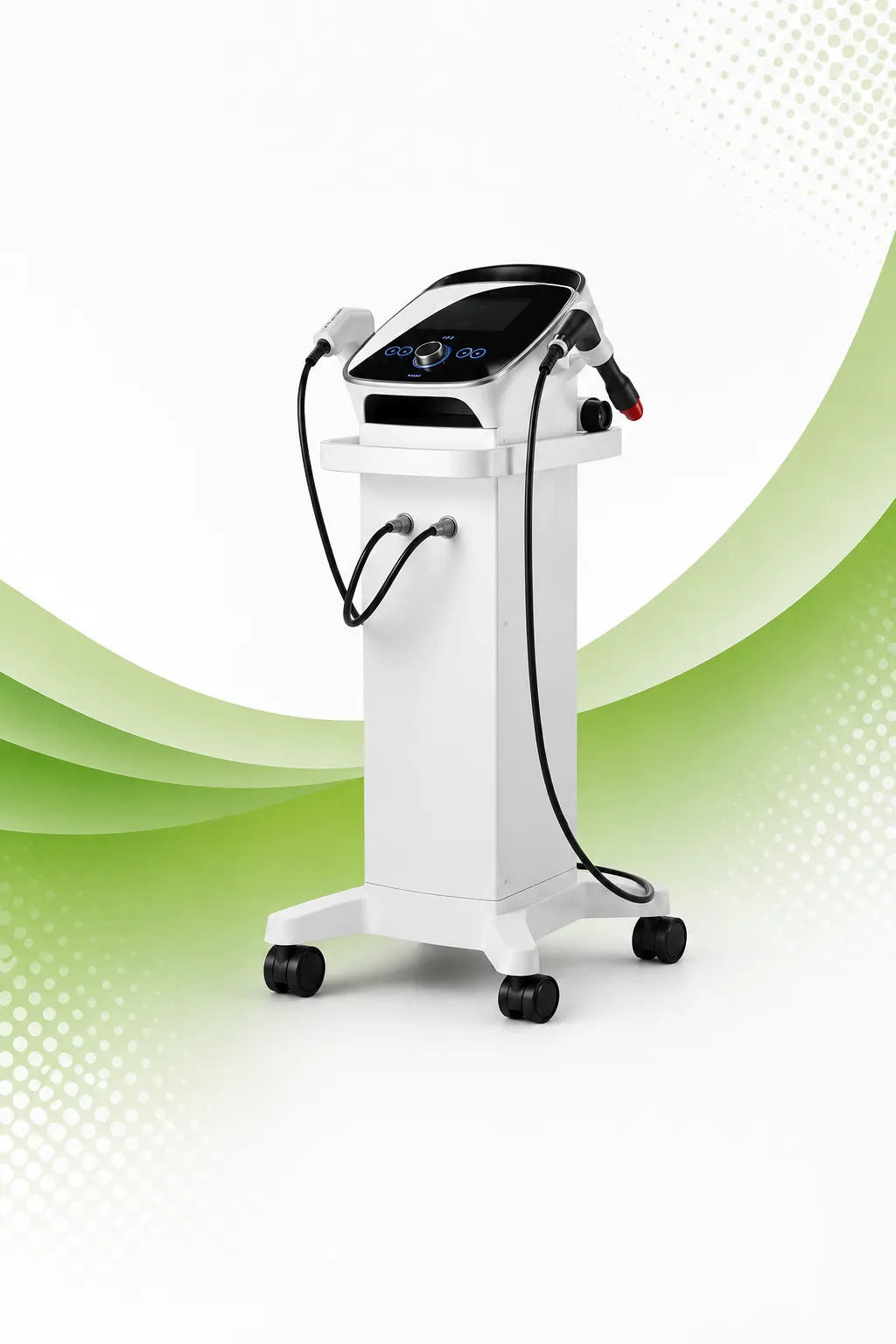
Shockwave therapy uses acoustic pressure waves delivered through a handheld probe, applied directly over the painful area of the tendon. Those pressure waves create a controlled, low-level stimulus in the tissue, which is thought to encourage blood flow and kick-start the body's own repair process in a tendon that's stopped healing on its own.
It's a targeted treatment for a specific problem area — heel and Achilles pain, tennis elbow, shoulder tendon pain, and plantar fasciitis are the conditions it's most commonly used for — rather than a general treatment for the whole limb or joint. That's part of why it can help when rest and ice alone haven't: it's doing something active at the site of the problem, session after session, instead of leaving the tendon to try and sort itself out.
What a course of shockwave therapy looks like
At GD Health Clinic, shockwave therapy is currently only available at our Barrow-in-Furness site (it's the only shockwave machine between Workington and Kendal), led by Phoebe. Appointments are 45 minutes and cost £80 each. Most people need a course of 4 to 6 sessions, spaced 7 to 10 days apart, rather than a single treatment — the effect builds gradually as the tendon responds over the course.
A typical session starts with Phoebe checking in on how the area has responded since your last visit, then locating the most tender part of the tendon before applying the shockwave probe directly over it. You'll feel a series of pulses, which can be uncomfortable but shouldn't be unbearable — the intensity is adjusted to what you can tolerate. It's a hands-on, in-clinic treatment: nothing to prepare beforehand, and most people are able to carry on with light daily activity afterwards, though your clinician will talk you through what to avoid between sessions for your specific injury.
Because the effect builds gradually across the course rather than in one hit, it's worth going in expecting steady, incremental change rather than instant relief after session one — most people notice things starting to shift a few sessions in, once the tendon has had a chance to respond to repeated stimulus.
Is shockwave therapy right for you?
Shockwave therapy tends to suit people with tendon pain that's been going on for a while — typically six weeks or more — and hasn't settled with rest, stretching, or over-the-counter pain relief on its own. It's commonly used alongside physiotherapy rather than instead of it, and if there's any doubt about what's actually causing your pain, a diagnostic ultrasound scan beforehand can confirm it's a tendon problem rather than something else before you start a course of treatment.
It's a treatment we see used most by people in their 40s and older who are otherwise active and want to stay that way — keeping up sport, gardening or a physical job without a tendon problem holding them back — rather than accepting that ongoing ache as just something to live with.
As with any treatment, results vary from person to person, and shockwave therapy isn't guaranteed to resolve every case — but for tendon pain that's stopped responding to rest, it gives the tissue something more active to work with.
Getting to Barrow for treatment
Because the shockwave machine is currently only at our Barrow-in-Furness clinic, we see patients travelling in for it from Millom, Dalton-in-Furness, Ulverston, Askam and across south Cumbria, alongside their usual physiotherapy or injections closer to home where that's an option. If travel is a concern, it's worth asking at your assessment whether your specific tendon problem is one where the trip to Barrow is likely to be worthwhile.
Frequently asked questions
How long before rest and ice count as "not working"?
As a rough guide, if tendon pain hasn't meaningfully improved after four to six weeks of rest, activity modification and basic pain relief, it's worth getting it assessed rather than continuing to wait it out.
Does shockwave therapy hurt?
It can feel uncomfortable during the session, particularly directly over the sore spot, but it's brief and most people tolerate it well. Your clinician will adjust the intensity to what you can manage.
Can I keep exercising during a course of shockwave therapy?
Often yes, in a modified way — your clinician will advise what's sensible between sessions based on your specific injury and how it's responding.
Do I need a scan before starting shockwave therapy?
Not always, but if there's any uncertainty about the diagnosis, a diagnostic ultrasound scan at the clinic can confirm what's going on before you commit to a course.
Is shockwave therapy available at the Millom clinic?
Currently shockwave therapy is only offered at our Barrow-in-Furness site. Millom patients are welcome to book a Barrow appointment for this treatment.
assessment.
Call or book online, and we'll book you in at the clinic that offers the treatment you need. Current prices are on the price list.
Book onlineOr call 07849 617337. Barrow-in-Furness: FAB Fitness and Health Club, Hollywood Park, Hindpool Road. Millom: 12 Wellington Street.