
Why Does My Shoulder Pain Flare Up at Night?
If your shoulder pain gets worse the moment you lie down — or wakes you up when you roll onto it — you're not imagining it. Night-time shoulder pain has a handful of common causes, and which one you've got changes what actually helps. Here's what's usually going on, and what to do about it.
Why shoulder pain gets worse at night
A few things stack up once you're horizontal:
- Direct pressure. Lying on the affected side compresses the tendons and bursa that sit just under the point of your shoulder — the same tissue that's already irritated during the day.
- Less movement. During the day, moving the joint keeps blood flowing through it. Overnight, the joint sits still for hours, and inflamed tissue tends to stiffen and ache more when it isn't moving.
- Lower natural cortisol. Your body's own anti-inflammatory hormone dips overnight, so inflamed tendons or a bursa that felt manageable at 3pm can feel a lot sharper at 3am.
- Arm position. Sleeping with your arm overhead or twisted awkwardly can pinch an already-narrowed space under the shoulder blade (the subacromial space), which is where a lot of night pain starts.
What's usually causing it
Night-specific shoulder pain is a classic sign of a small group of conditions:
- Rotator cuff tendinopathy — wear-and-tear or overload in the tendons that stabilise the shoulder joint. Very common from your 40s onward, and often the cause when pain is worse reaching overhead or behind your back as well as at night.
- Subacromial impingement — the tendons and bursa getting pinched during certain movements, which tends to flare with pressure or with the arm raised.
- Frozen shoulder — if night pain is joined by a stiffness that's steadily worsening and limiting how far you can move the arm in any direction, this is worth ruling in or out early, since it responds differently to treatment.
- Shoulder or subacromial bursitis — inflammation of the fluid-filled cushion under the shoulder, often triggered by repetitive overhead activity or a period of overuse.
- Osteoarthritis — less common in the shoulder than the knee or hip, but it does happen, particularly with a background of previous injury.
The tricky part is that several of these feel similar from the inside — dull ache, sharper on certain movements, worse lying on that side — but they're treated differently. That's the main reason to get it looked at rather than guess.
It's also worth saying who tends to get this. Rotator cuff and impingement problems become a lot more common from your 40s onward, especially if you've done years of repetitive overhead work or sport — decorating, plastering, swimming, throwing sports — or spent a long time at a desk with rounded shoulders, which changes how the tendons sit under the shoulder blade. None of that means it's untreatable, just that it usually needs more than a few days of rest to properly settle.
Do I need a scan?
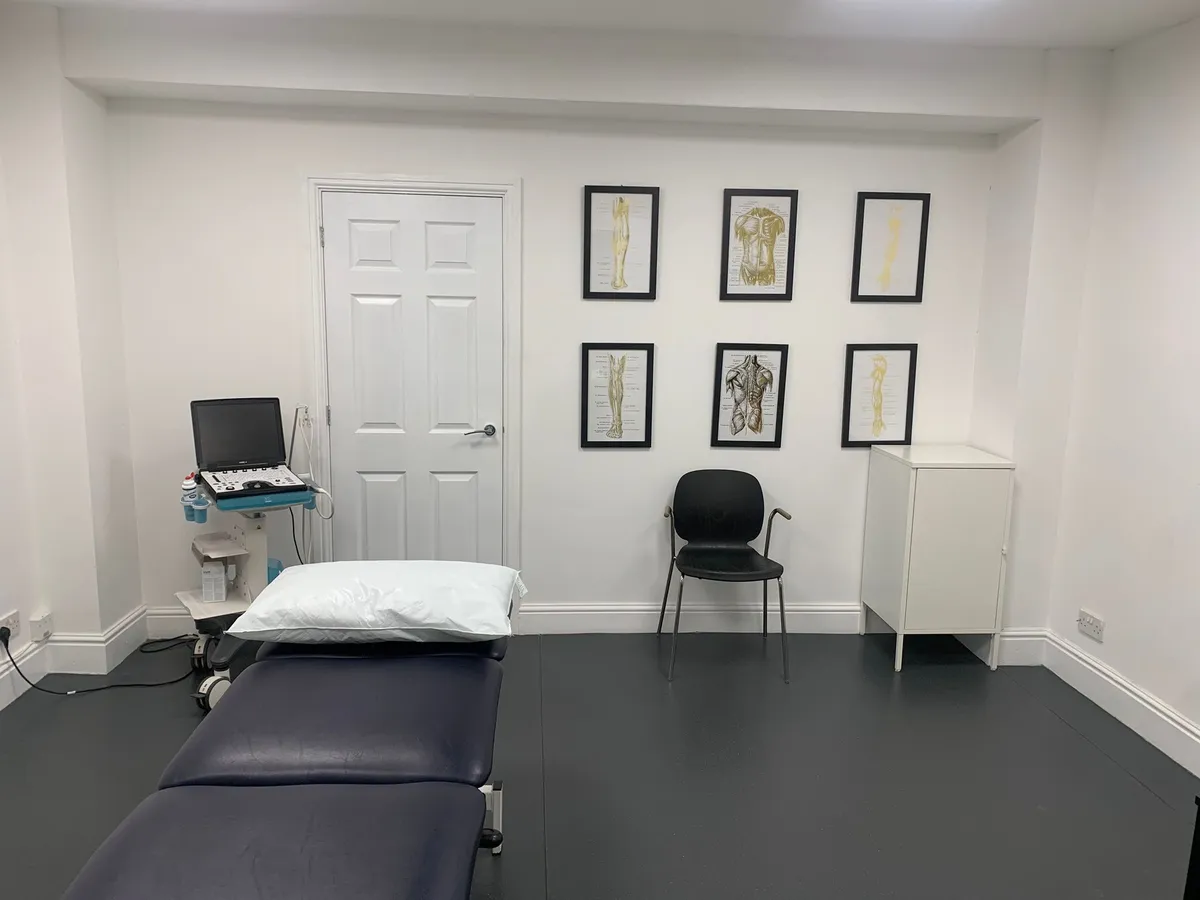
Not always, but it helps more than people expect. A diagnostic ultrasound scan lets us see the tendons, the bursa and the joint directly, rather than treating based on symptoms alone. It's quick, doesn't involve radiation, and means treatment gets targeted at what's actually going on instead of a best guess. GD Health Clinic is the only clinic in south Cumbria offering diagnostic ultrasound alongside hands-on treatment, so the scan and the plan happen at the same appointment rather than being two separate referrals.
What actually helps
Short term, while you sort out what it is
- Sleep on your back or the opposite side, with a pillow supporting the affected arm so it isn't hanging forward or pulling on the shoulder.
- Avoid sleeping with the arm above your head — it narrows the space the tendons run through.
- Keep moving it gently during the day. Complete rest tends to make tendon pain worse, not better, once the acute flare has settled.
Physiotherapy
For most rotator cuff and impingement-type pain, a structured loading and strengthening programme is the first thing worth trying — it addresses the underlying weakness or overload pattern rather than just the symptom. Our physiotherapy team builds this around what the scan (if you have one) shows.
Shockwave therapy
For tendon pain that hasn't settled with rest and exercise alone — particularly rotator cuff tendinopathy that's been dragging on for weeks or months — shockwave therapy is often the next step. It uses acoustic wave pulses to stimulate healing in the tendon itself, rather than just calming symptoms. At GD Health it's a 45-minute appointment, £80 per session, usually run as a course of 4-6 sessions spaced 7-10 days apart, and it's led by Phoebe. It's currently only available at our Barrow-in-Furness clinic — the only machine of its kind between Workington and Kendal, so patients across south Cumbria don't need to travel to a city for it.
Steroid or hyaluronic acid injections
Where there's a lot of inflammation around the bursa or tendon, an ultrasound-guided injection can bring that down quickly and give you a window to get moving and into physiotherapy without the night pain getting in the way. This tends to suit bursitis and some impingement presentations better than tendinopathy on its own.
When to get it looked at rather than wait
Worth booking in sooner if: the pain is stopping you sleeping most nights, it's been going on more than a few weeks, you're losing range of movement (especially reaching behind your back or overhead), or the shoulder feels weak as well as painful. None of these need to be a full-blown crisis before they're worth assessing — earlier tends to mean a simpler fix.
Frequently asked questions
Why is my shoulder pain worse lying down but fine when I'm up and about?
Direct pressure on the tendon or bursa, less movement to keep blood flowing, and a natural dip in the body's anti-inflammatory hormone overnight all combine to make tendon and bursa-related pain feel worse in bed than during an active day.
Should I stop using my arm if it hurts at night?
Not completely — gentle, regular movement during the day tends to help tendon pain more than rest does. Avoiding the specific positions that aggravate it (overhead reaching, sleeping on that side) makes more difference than resting the whole arm.
How do I know if it's a rotator cuff problem or frozen shoulder?
The main difference is stiffness. Frozen shoulder progressively limits how far the arm moves in every direction, including when someone else moves it for you. Rotator cuff and impingement problems are usually more about pain on specific movements, with range of movement closer to normal. A scan or assessment settles it either way.
Will a steroid injection fix it permanently?
An injection calms inflammation and pain, which often makes a big short-term difference, but it doesn't address why the tendon became overloaded in the first place. It's commonly used alongside physiotherapy rather than instead of it.
Do I need a GP referral to get a shoulder scan?
No — you can book a diagnostic ultrasound directly with GD Health Clinic without going through a GP referral first.
assessment.
Call or book online, and we'll book you in at the clinic that offers the treatment you need. Current prices are on the price list.
Book onlineOr call 07849 617337. Barrow-in-Furness: FAB Fitness and Health Club, Hollywood Park, Hindpool Road. Millom: 12 Wellington Street.