
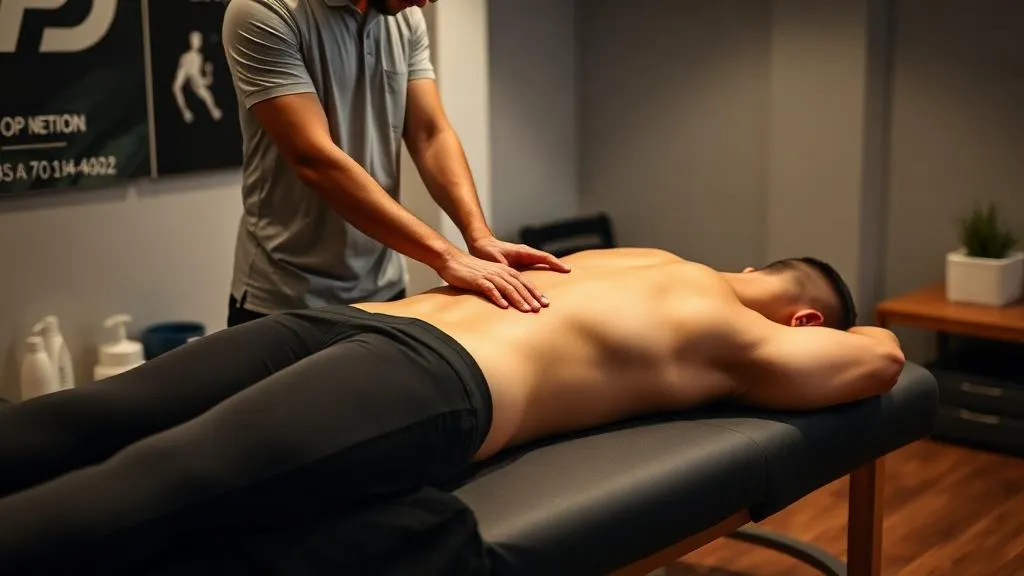
Sports Massage: How It Helps With Recovery and Stubborn Muscle Pain
Sports massage helps recovery and stubborn muscle pain by increasing blood flow to tight or overworked tissue, easing muscle tension, and improving mobility around a joint or muscle group that's been under strain. It won't fix a structural problem on its own, but for muscle tightness, post-exercise soreness, and pain that keeps coming back after activity, it's one of the most direct ways to get relief without waiting weeks for it to settle on its own.
If you're active — whether that's five-a-side on a Sunday, a regular gym session, or just a physically demanding job — muscle tightness and soreness build up. Sports massage is aimed at exactly that: not a relaxing spa treatment, but a targeted, working session on the muscles that are giving you trouble.
What sports massage actually involves
A session starts with a short assessment — where the tightness or pain is, what's causing it, and what you're trying to get back to (training, work, day-to-day movement). From there it's targeted massage on the affected muscles, followed by aftercare advice: stretches, load management, or when to come back.
Sessions run 30 or 60 minutes depending on how much needs covering. There are a few different approaches, and which one's right depends on timing and goal:
- Pre-event massage — a stimulating massage to prepare muscles before activity and reduce injury risk.
- Post-event massage — aimed at helping muscles recover after exercise or competition.
- Maintenance massage — regular sessions to manage ongoing tightness before it becomes a bigger problem.
- Remedial massage — more focused work on a specific area of pain or restriction.
How it helps with recovery
After hard training, a heavy work week, or just carrying tension in your shoulders and lower back, muscles stay tight and circulation to the area slows down. Massage increases blood flow to the muscle, which helps clear the by-products of exercise and deliver what the tissue needs to repair. That's why post-event and maintenance massage are often used by people training regularly — not to fix an injury, but to stop small tightness turning into a bigger problem.
It also helps with the more everyday version of this: stiff shoulders from a desk job, a tight lower back from standing all day, or calves that never quite loosen off between gym sessions. You don't need to be an athlete for muscle tension to build up to the point it's affecting how you move.
Who tends to book sports massage
It's not just people training for an event. In and around Barrow-in-Furness, Millom and the rest of south Cumbria, a lot of the people who book in are managing muscle tension from physically demanding work — shipyard and manual trades, warehouse and lifting roles, or long shifts on your feet — as much as from sport. The pattern is usually the same: the same muscles get loaded the same way, day after day, and eventually they stop resetting between shifts.
The other common group is people at a desk most of the day, where the problem is the opposite — not enough movement, tight hips, a stiff neck and shoulders from screen posture. Massage helps here too, though if it's a desk-work pattern that keeps recurring, it's worth pairing with some simple changes to how the workstation is set up rather than just treating the tightness each time it comes back.
How it helps with stubborn muscle pain
Stubborn muscle pain — the kind that doesn't shift with rest, stretching, or time — is usually a sign the muscle is holding onto tension around a specific point, sometimes called a trigger point. Remedial massage works directly on that area, releasing the tightness and easing the referred pain that often comes with it (a tight muscle in the shoulder, for example, can cause pain that's felt down the arm).
This is different from a general relaxation massage. It's more direct, sometimes uncomfortable in the moment, and focused on the specific muscle or area that's the problem — which is why it tends to work where a lighter massage hasn't.
What determines how many sessions you need
There's no fixed number that applies to everyone. A single session before or after an event is often enough to take the edge off tightness and help you recover faster. Ongoing or recurring tension — the kind that builds up from training load, a physical job, or a posture pattern that doesn't change — usually responds better to a short run of maintenance sessions spaced a few weeks apart, rather than one massage and hoping it holds. Your therapist will factor in how long the tightness has been building, how it responds after the first session, and what you're trying to manage it for, and adjust the plan from there.
When physiotherapy or a scan might be needed instead
Sports massage is well suited to muscle tightness and soreness. It's not the right starting point for joint pain, a suspected tendon injury, or pain that's been building for months rather than days — those need a proper physiotherapy assessment, and sometimes a diagnostic ultrasound scan, to work out what's actually going on before treating it. If your pain is coming from a joint rather than a muscle, or it's not improving after a few sessions, that's usually the sign to get it looked at properly rather than keep booking massage.
Getting sports massage in Barrow-in-Furness and Millom
GD Health Clinic offers sports massage at both clinic locations — Barrow-in-Furness and Millom — as well as physiotherapy, diagnostic ultrasound, and joint injections for people across south Cumbria, including Dalton-in-Furness, Ulverston and Askam. If muscle tension is only part of the picture — for example alongside joint pain or a niggle that hasn't settled — the same clinic can assess the joint properly rather than treating the muscle in isolation.
FAQs
How often should I get a sports massage?
It depends on your activity level and what you're managing. Some people book maintenance sessions every few weeks during a heavy training block; others come in only when a specific area is bothering them. Your therapist can advise on frequency based on your assessment.
Is sports massage painful?
Remedial work on a genuinely tight or restricted muscle can be uncomfortable, especially around a trigger point, but it shouldn't be sharply painful. Tell your therapist if pressure needs adjusting — it's a working session, not something to grit your teeth through.
Can sports massage help if I'm not an athlete?
Yes. Most of the demand isn't from competitive athletes — it's people with tight shoulders from desk work, a stiff lower back, or calves and hamstrings that stay tense between gym sessions.
What's the difference between sports massage and a normal massage?
Sports massage is more targeted and working — assessment first, then focused work on the muscle causing the problem, plus aftercare advice. It's aimed at a specific issue rather than general relaxation.
Should I get a massage or see a physiotherapist?
If it's muscle tightness or soreness, massage is a good first step. If it's joint pain, a suspected tendon problem, or pain that isn't settling, physiotherapy — with a scan if needed — is the better starting point.
How long does the relief from a sports massage last?
This varies a lot by person and by what's causing the tightness in the first place. Some people feel looser for days after one session; others find it helps most as part of a regular routine alongside stretching and activity changes rather than as a one-off fix.
assessment.
Call or book online, and we'll book you in at the clinic that offers the treatment you need. Current prices are on the price list.
Book onlineOr call 07849 617337. Barrow-in-Furness: FAB Fitness and Health Club, Hollywood Park, Hindpool Road. Millom: 12 Wellington Street.