
Why Does My Wrist Hurt When I Type or Grip Things?
Wrist pain that flares up when you type, grip a mug, or twist a jar lid is one of the most common hand complaints we see at GD Health Clinic. It's rarely one single thing — the wrist is a tight bundle of tendons, nerves and small joints, and pain on gripping or typing usually points to one of a handful of well-understood problems. This article walks through the most likely causes, how we work out which one you've got, and what actually helps.
The most common reasons your wrist hurts when you type or grip
De Quervain's tenosynovitis
This is inflammation of the tendon sheath that runs along the thumb side of your wrist. It's the classic cause of pain when gripping, twisting, or lifting with a "thumbs-up" type motion — picking up a kettle, wringing out a cloth, or lifting a toddler under the arms. Typing can aggravate it because of the repeated thumb movement on a phone or keyboard. The pain usually sits right at the base of the thumb and can feel sharp when you grip something firmly.
Carpal tunnel syndrome
If the pain comes with tingling or numbness in the thumb, index and middle fingers — especially at night or after long spells of typing or driving — that points toward the median nerve being compressed as it passes through the carpal tunnel. Gripping can feel weaker than it should, and you might find yourself shaking your hand out to settle the pins and needles.
Wrist extensor or flexor tendinopathy
Repeated keyboard and mouse use, or manual work that involves a lot of gripping, can irritate the tendons that run across the back or front of the wrist. This tends to produce a dull, aching pain that builds through the day rather than a sharp one, and it's often worse first thing in the morning or after a heavy day at a desk or on tools.
Early thumb-base or wrist arthritis
In a smaller number of cases, particularly in people over 40, wrist or thumb-base pain that's worse with gripping is early osteoarthritis rather than a soft tissue problem. This tends to come on gradually rather than after a specific activity, and it's often accompanied by some stiffness first thing in the morning.
Trigger finger or thumb
Less about the wrist itself and more about a tendon catching as it runs through a narrowed pulley in the palm — this shows up as a finger or thumb that clicks, locks, or catches when you bend it, often alongside general gripping discomfort.
Why it matters which one you've got
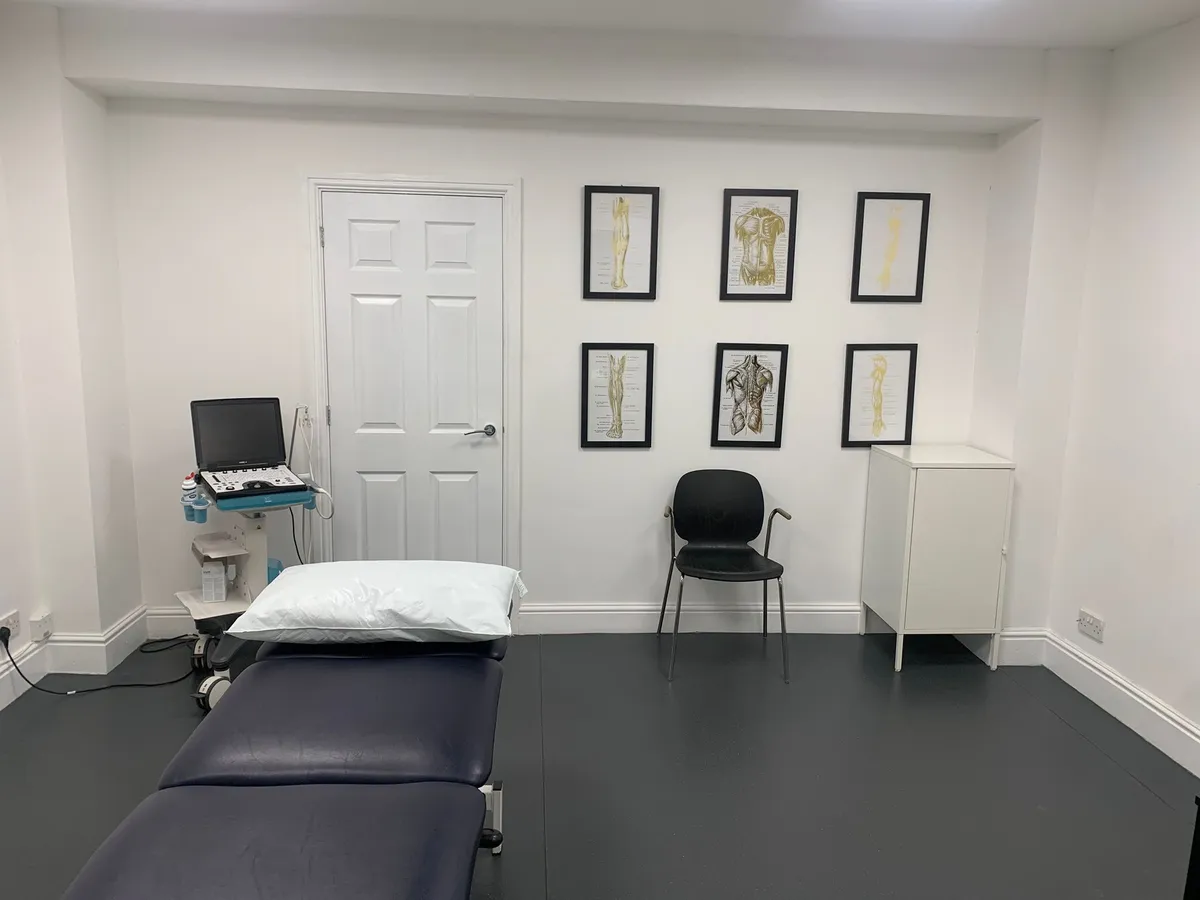
These conditions can feel similar from the inside but need different treatment. Rest and a splint that helps De Quervain's tenosynovitis won't do much for carpal tunnel syndrome, and treating early arthritis the same way as a tendon problem can leave you managing symptoms for months longer than necessary. This is where a proper assessment — and, where it's useful, a diagnostic ultrasound scan — makes the difference. Ultrasound lets us see the tendons, tendon sheaths and surrounding soft tissue directly, so treatment is aimed at what's actually going on rather than a best guess from symptoms alone.
What actually helps
Activity modification and splinting
For milder cases of tendon irritation, particularly De Quervain's or general tendinopathy, a period of reduced repetitive gripping combined with a thumb spica or wrist splint can settle things down. Simple changes to keyboard and mouse setup — wrist position, mouse size, typing angle — often reduce the ongoing irritation that's keeping symptoms going.
Physiotherapy
For tendon-related wrist pain, physiotherapy focused on graded loading, grip strengthening and correcting the movement patterns that are overloading the tendon is usually the first line of treatment. It's also useful for early carpal tunnel symptoms, where nerve gliding exercises and posture work can reduce pressure on the nerve.
Steroid injection
Where a tendon sheath or the carpal tunnel is clearly inflamed and hasn't settled with rest, splinting and physiotherapy, a steroid injection into the affected sheath or tunnel can calm the inflammation directly. At GD Health this is done with ultrasound guidance, so the injection is placed precisely into the sheath or tunnel rather than the surrounding tissue — this matters in an area as small and crowded as the wrist. It's a well-established treatment for De Quervain's tenosynovitis and carpal tunnel syndrome, and for some people it's enough on its own; for others it buys time and comfort while physiotherapy and activity changes do the longer-term work.
Diagnostic ultrasound first, where it's useful
Not every wrist pain needs a scan before treatment starts — plenty of mild cases settle with simple measures. But if pain has been going on for more than a few weeks, hasn't responded to rest and splinting, or the diagnosis isn't clear-cut, a scan avoids treating the wrong problem. It's also how we confirm whether an injection is appropriate and exactly where it needs to go.
When to get it looked at
It's worth getting a wrist assessed rather than pushing through if: the pain has lasted more than two to three weeks, you're getting numbness or tingling in your fingers, gripping strength is noticeably reduced, or a finger or thumb is starting to catch or lock. None of these are emergencies, but the earlier a tendon or nerve problem is identified, the more options there are for treating it without it becoming a longer-running issue.
We see this regularly in people across Barrow-in-Furness, Millom, Dalton-in-Furness, Ulverston and Askam whose work or hobbies involve a lot of typing, gripping or manual tasks — office workers, tradespeople, keen gardeners and new parents all show up with some version of this. You don't need to travel out of south Cumbria to get it properly assessed; diagnostic ultrasound, physiotherapy and ultrasound-guided steroid injections are all available at our Barrow and Millom clinics.
Frequently asked questions
Is wrist pain from typing always carpal tunnel syndrome?
No. Tingling and numbness in the thumb and first two fingers point toward carpal tunnel syndrome, but pain concentrated at the thumb side of the wrist without numbness is more often De Quervain's tenosynovitis or general tendon irritation. An assessment is the only reliable way to tell them apart.
How long does a steroid injection for wrist pain take to work?
Response varies by person and by what's being treated, but many people notice a reduction in inflammation within a week or two. It isn't a guaranteed fix on its own — it works best alongside activity changes and, where needed, physiotherapy.
Do I need a scan before I can have an injection?
Not always, but it's recommended when the diagnosis isn't clear or symptoms have been present for a while. Ultrasound guidance during the injection itself is standard practice at GD Health regardless, to make sure the medication goes exactly where it needs to.
Can I keep working while I sort this out?
Usually yes, with some adjustments — splinting, changes to keyboard/mouse setup, and pacing gripping tasks through the day. We'll talk through practical changes for your specific job or hobbies as part of your assessment.
What if it's actually early arthritis rather than a tendon problem?
That changes the treatment plan, which is exactly why getting an accurate diagnosis matters before committing to months of splinting or exercises aimed at the wrong tissue.
assessment.
Call or book online, and we'll book you in at the clinic that offers the treatment you need. Current prices are on the price list.
Book onlineOr call 07849 617337. Barrow-in-Furness: FAB Fitness and Health Club, Hollywood Park, Hindpool Road. Millom: 12 Wellington Street.